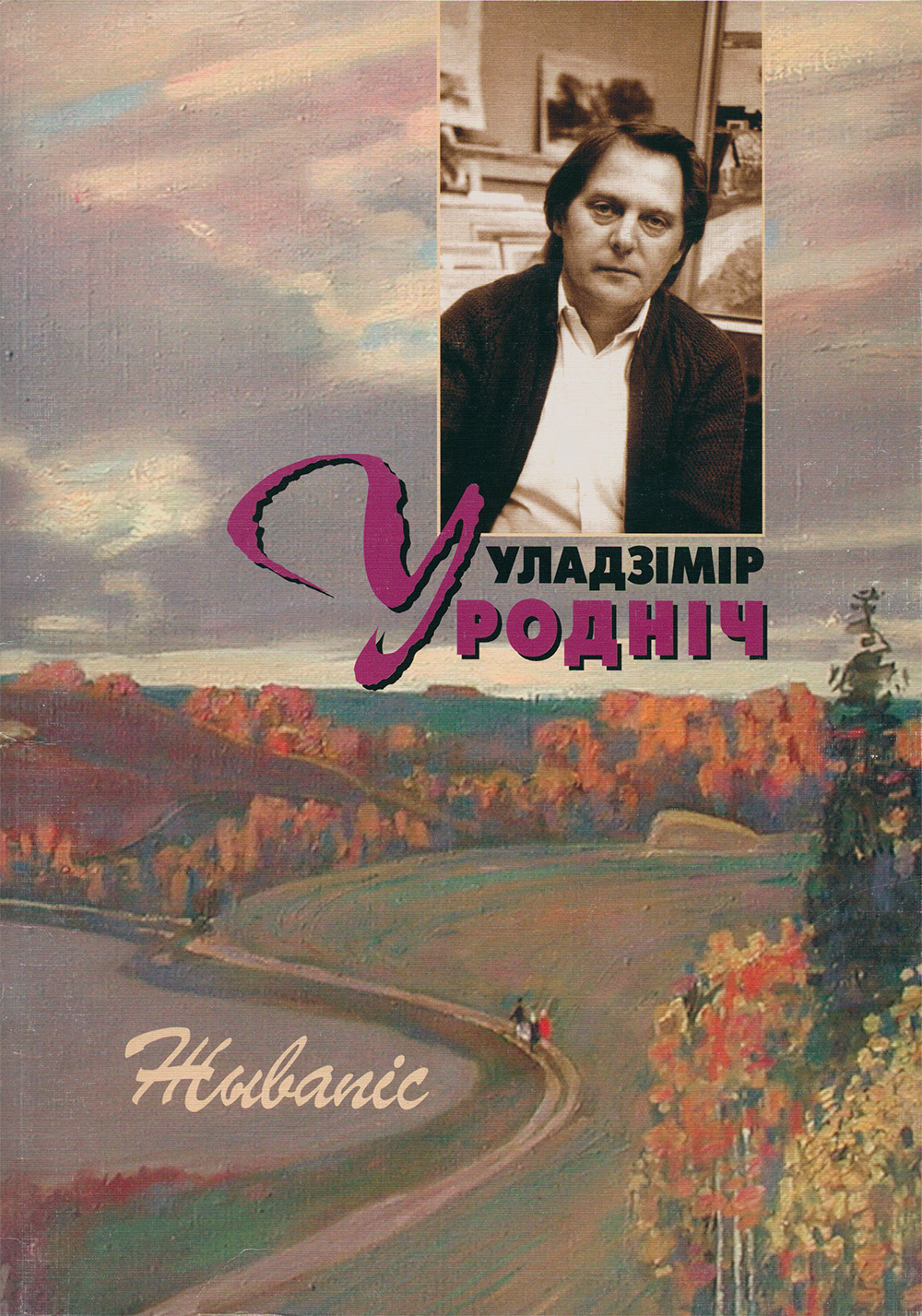
Уладзімір Родніч
Мінск 2002
Оядомы беларускі жывапісец Уладзімір Васільевіч Уродніч нарадзіўся 22 мая 1942 года (на Міколу) на хутары Лучкі, каля вёскі Вялікія Арлы Столінскага раёна. У 16 гадоў ён паступае ў Мінскае мастацкае вучылішча, дзе першыя яго настаўнікі А. Галоўчанка, А. Шаўчэнка навучылі юнака майстэрству малюнка, жывапісу, кампазіцыі.
У 1963 годзе з благаслаўлення народнага мастака Беларусі Паўла Масленікава У. Уродніч быў прыняты ў дзяржаўны тэатральнамастацкі інстытут. У сценах БДТМІ фарміраваўся не толькі рамеснік, а чалавек з шырокім светапоглядам, добрым густам, грамадзянскай пазіцыяй.
Уладзімір лічыць, што асваеннем традыцый беларускага станкавага жывапісу і ўдасканаленнем свайго каларыту, тэхнікі, майстэрства малюнка ён абавязаны педагогам I. Ахрэмчыку, Н. Воранаву, А. Казлоўскаму, якія заклалі маладому мастаку арыенціры творчага развіцця.
Пасля пятага курса інстытута ў 1971 ён быў запрошаны на працу ў Міністэрства культуры Беларусі, але творчую работу ў жыцці лічыў галоўнай. Вольны час праводзіў у напружанай рабоце ў майстэрні, выхадныя дні насычваліся пленэрам.
Значнае месца ў яго творчасці займае тэматычная карціна на героікапатрыятычную тэму: «Дарогамі Перамогі» (1972), «Сынам нашым» (1978), «Думы аб былым» (1981), «Вышыня» (1985), «На хлебаробным полі» (1987), «Лістапад» (1995), «...і агні партызанскіх кастроў» (2000). Гэтыя палотны вылучаюцца кантрастным вырашэннем кампазіцыйнай структуры. У іх прасочваецца ўважлівае стаўленне да малюнка, што дапамагае жывапісцу канструяваць дэталь твора, як пераканаўчы элемент мастацкай праўды.
V жывых апаэтызаваных пейзажах роднай вёсачкі У. Уродніч карыстаецца светлай каляровай гамай. Пражыўшы большую частку жыцця ў горадзе, мастак застаўся ў душы хутаранінам, які ўсё ўспрымае праз акенца сваёй хаты, куды перыядычна ён вяртаецца не толькі фізічна, але і ў думках.
Дзіцячыя ўспаміны шырока адлюстраваны ў яго цыкле «Людзі Століншчыны». У карцінах: «Над ракой Вятліцай», «На берагах Гарыні», «Рытмы Прыпяці», «Дарога майго юнацтва», «У Лучках ідзе дождж», «Апошнія яблыкі бабкі Тэклі», «Тумановая раніца», «На Палессі гоман» і інш. адлюстраваны тыповыя сцэны сялянскага жыцця, быт якога ён добра ведае. На першае месца мастак выстаўляе чалавечую дзейнасць. Ім, сваім землякам, прысвяціў ён шэраг партрэтаў: «Акно мацярынскае», «Старшыня калгаса. Ляшук», «П. Амяльчук», «Вясёлка надзеі. М. Дрынеўскі», «Натхненне. Н. Загорская» і інш. Глыбокае спачуванне звычайным чалавечым перажыванням дапамагае мастаку пазбегнуць надуманасці. Характэрныя рысы стылю мала мяняюцца ў яго творчым жыцці. У 1 990я гады ён напісаў палотны на чарнобыльскую тэму: «Трывожны крык» (1990), «Пах бэзу» (1996), «У садзе» (2000). У апошнія гады Уладзімір Уродніч звяртаецца да гістарычнай спадчыны. Палотны «Калі я на пошце служыў ямшчыком» (1999) прысвяціў паэту Уладзіміру Сыракомлі, «Раніца Гарыні» — 900годдзю ДавыдГарадка. Яго вабяць дыялогі па ўсім спектры чалавечых узаемаадносін. Трагедыя, звязаная з лёсам кінарэжысёра А. Бубашкіна (зяць мастака), значна скарэкціравала накірунак творчасці жывапісца. Гэтаму здарэнню ён прысвяціў восем работ, у аснову якіх ляглі разважанні мастака аб ролі чалавечай асобы ў перыяд распаду пастулатаў маралі.
Жывапісец не паддаецца модным зараз паветам, а працягвае ствараць сюжэтныя кампазіцыі, пейзажы, партрэты рэалістычнага накірунку.
У. Уродніч лічыць, што мастацтва ў перыяд разбурэння грамадскіх і дзяржаўных асноў павінна заставацца на баку дабрыні, спагадлівасці і павагі да Чалавека. I ў пошуках адэкватнага адлюстравання гэтага ён гатовы і надалей ісці шляхам спасціжэння, сцвярджаючы перавагу дабрыні над злом.
Паўрэат прэміі «За духоўнае адраджэнне» мастацтвазнаўца Галія Фатыхава
^ladzimir Vasilyevich Urodnich, a wellknown Belarusian painter, was born 22 May 1942 (St. Nicolas Day) in farmstead Luchki near the village of Vialikiya Arly (Great Eagles) in Stolin district. At the age of 16 he entered Minsk Art School where his teachers were A. Halouchanka and A. Shauchenka. They trained the young artist to the mastery of drawing, painting, composition.
In 1963 with blessing of Pavel Maslennikau — People's Artist of Belarus — Uladzimir Urodnich entered Belarus State Theatre. Here in the Institute Uladzimir was formed not only as a craftsman but as a man with a wide world outlook, good taste and civil position.
Uladzimir believes that he is obliged to his teachers I. Akhremchuik, N. Voranau, A. Kazlousky who have laid traditions of Belarusian easel art and have given him the guidelines for creative developments.
After graduating from the Institute in 1971 he was invited to work to the Ministry of Culture of Belarus, but he considered creative work his main business. His "spare time" passed in strenuous work, the days of rest were filled with pleinairs.
Pictures on heroic and patriotic theme occupies a significant place in his creative work: "Along the Ways of Victory" (1972), "To Our Sons" (1978), "Thought about the Past" (1981), "Height' (1985), "On the Cereals Field" (1987), "Fall of Leaves" (1995), "Lights of Partisan Campfires" (2000). These canvases are characterised with the contrast solution of compositional structure. Looking at these pictures one can observe attentive attitude to drawing which helps him to design a detail of a work as a convincing element of the art truth.
Painting the alive poetised landscapes of the native village U. Urodnich makes use of a light colour palette. Inspite of having spent the largest part of his life in a city the artist remained a farmsteader in his soul, a villager who perceives the world through the window of his hut where he periodically returns not only physically but also in his thoughts.
Recollections of his childhood are well reflected in his cycle "People of Stolin District". In his pictures "On the Viatlitsa River", "On the Banks of Horyn", "Rhythms of the Pripiat", "A Road of My Youth", "It's Raining in Luchki", "Grandmother Teklia's Last Apples", "Foggy Morning", "Hubbub on Polessye" and others. As a rule these pictures represent typical scenes of peasant's life which is very familiar to him. At the first place the artist puts forward human activity. He dedicated to his fellowvillagers a series of portraits: "Mother's Window", "Chairman of a Collective Farm A. Liashuk", "P. Amialchuk", "A Rainbow of Hope (M. Drineuski)", "Inspiration (N. Zagorskaya)" and others. Deep liking and ordinary human feelings help the artists to avoid farfetchedness and affectation. The typical traits of this style have not changed much during his creative life. In 1990s he painted canvases on Chernobyl theme: "An Anxious Shout" (1990), "Smell of Lilac" (1996), "In a Garden" (2000). During the recent years Uladzimir Urodnich addressed to historical heritage: he dedicated the canvas "When I Served as a Coachman at a Post Station" to poet Uladzimir Syrokomlia, the picture "Morning of the Horyn"  to the 900th anniversary of DavydHaradok. The tragedy connected with film director A. Bubashkin (the artist's soninlaw) significantly corrected the painter's creative trend. He dedicated eight pictures to this accident implying in them his reasoning about the role of a human person in the period of collapse of human morality.
The artist resists the modern stylish trends and continues to create subject compositions, landscapes, portraits of realistic tenors.
Uladzimir Urodnich adheres to the idea that the art in the period of collapse of civil and state bases must stay on the side of kindness, sympathy and respect to a Man. In his searches of adequate reflecting of these qualities he is ready to go far along the way of perceiving and affirming the preponderance of kindness over evil.
Galina Fatykhova
Prizewinner in the Nomination "For Spiritual Revival"
V Лучках ідзе дождж, 1992, п.а., 180x130. It's Raining in Luchki. Canvas, oil.
3
Вышыня, 198.5, п. a., 170x200.
Height. Canvas, oil.
4
Тумановая раніца, 1989, п. в., 220x170. Foggy Morning. Canvas, oil.
5
Расквіталі яблыні і грушы..., 1977, п. а., 200x175.
Apple Trees and Pear Trees were in Blossom. Canvas, oil.
Бярэзавы звон, 1991, n. a., 80x100.
Birch Bells. Canvas, oil.
Памяць, 1994, n. a., 170x200.
Memory. Canvas, oil.
6
7
Вячэрнія промні, 1989, п. а., 120x100.
Evening Rays. Canvas, oil.
Рытмы Прыпяці, 1982, п. a., 140x200.
The rhythm of Preepyc. Canvas, oil.
8
Партрэт Ніны Загорскай, 1992, п. а., 135x110.
The Portrait of Nina Zagorskaya. Canvas, oil.
9
Смаловы пах, трыпціх, цэнтральная частка «Агонь кастра», 1994, п. а., 165x200. Resin Smell. The Central Part. The Flame of Bonfire. Canvas, oil.
Царква ў Каменцы, 1996, n. a., 70x70. The church at Camenec. Canvas, oil.
10
Шляхам лёсу, 1995, п. а., 70x70.
The way of the fate. Canvas, oil.
1 1
12
Cnee пшаніца, 1978, n. a., 120x100.
Wheat is Ripening. Canvas, oil.
Вясёлка надзеі. Партрэт M. Дрынеўскага, 1992, п. а., 180x120.
A Rainbow of Hope. The Portrait of Drineusky. Canvas, oil.
13
Партрэт маці, 1975, п. в., 100x90.
Porttrait of my Mother. Canvas, oil.
Над ракой Вятліцай, 1977, п. а., 230x175;
1990, п. а., 100x120.
Over the Viatlitsa River. Canvas, oil.
14
Гоман Палесся, 1981, п. а., 220x200.
Hubbub of Polessye. Canvas, oil.
15
Канец сенакосу, 1990, п. а., 100x120. The end of the haymaking. Canvas, oil.
16
Дваровая ідылія, 2000, п. а., 80x60. A Yard Idyll. Canvas, oil.
17
Ціхім вечарам, 1998, п. а., 60x80.
Quiet Evening. Canvas, oil.
18
На хлебаробным полі, 1984, п. a., 175x225.
On a Cereal Field. Canvas, oil.
Сумны май, 1990, n. a., 200x175. Sad May. Canvas, oil.
19
Пах бэзу, 1996, п. а., 150x145.
Smell of Lilac. Canvas, oil.
20
Вяртанне дамоў, 1987, п. a., 110x80.
Return at the home. Canvas, oil.
21
Раніца Гарыні, 2001, п. а., 225x1.50.
Morning of the Horyn. Canvas, oil.
22
23
Сустрэча, 1985, п. a., 175x200.
A Meeting. Canvas, oil.
Апошнія яблыкі бабкі Тэклі, 1989, п. a., 200x165.
Grandmother Tekly's last apples. Canvas, oil.
24
Вакно мацярынскае, 1978, п. а., 125x115.
Mother's Window. Canvas, oil.
 КНІГІ ОНЛАЙН