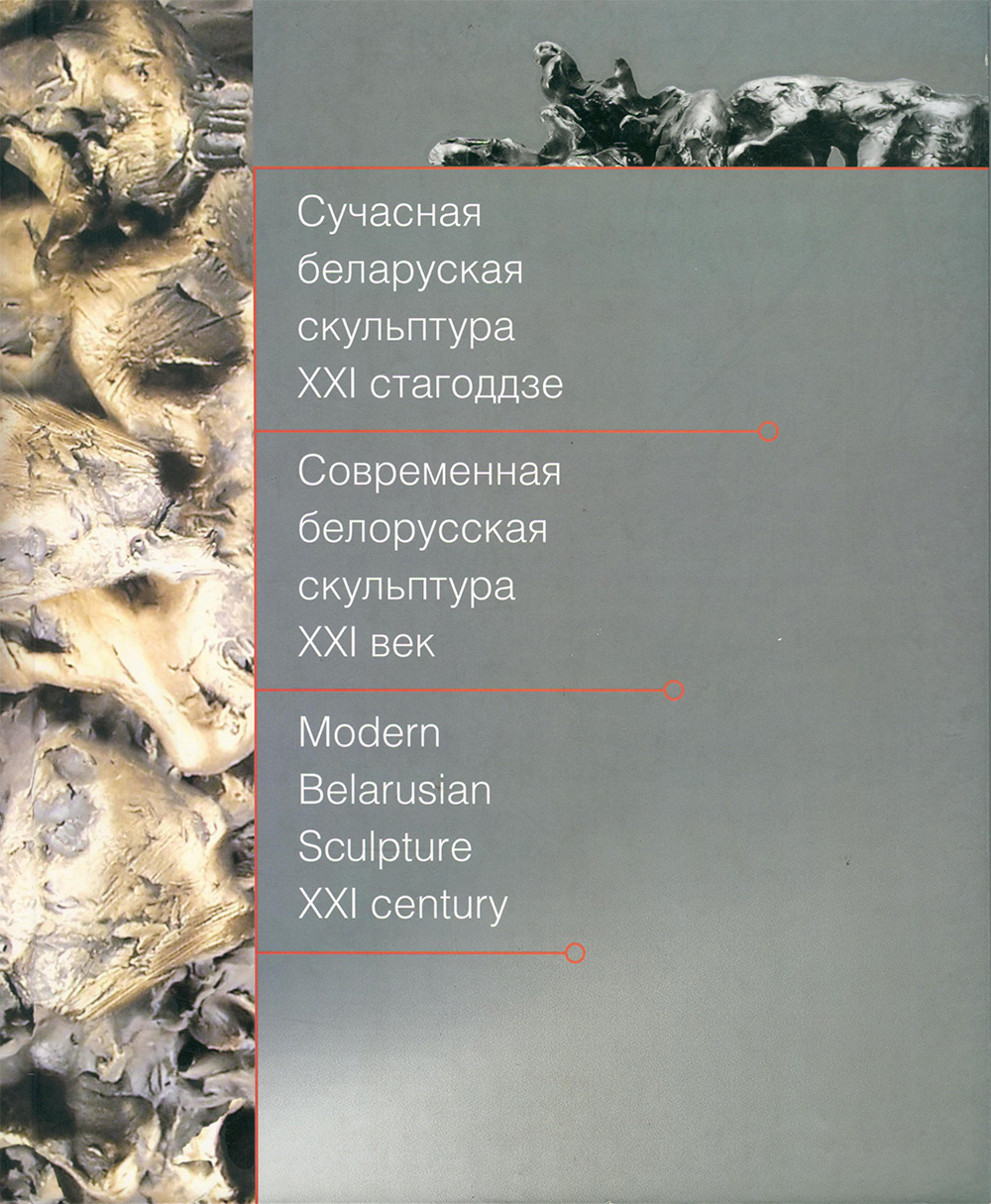
Сучасная беларуская скульптура. XXI стагоддзе
Выдавец: Беларуская Энцыклапедыя імя Петруся Броўкі
Памер: 360с.
Мінск 2011
Станковая скульптура становнтся более декоратнвной. Все реже п реже встречается реалнстнческмй портрет. Он сохраннлся в основном в качестве пластнкн академнческого направленпя. Редкостью стала лнтературная трактовка образов. Новое время ставнт более сложные задачм. Скульпторы стремятся постнгнуть смысл н суіцность процессов, нзменпть тональность с повествовательной на фнлософскую, ассоцматмвную. Скульптурный обьем, который выявляет внутреннпе пмпульсы н логнку предмета, требует нового образного мышлення  актнвной пластнческой формы, ломаюідей оболочку прнвычных канонов. Скульпторы экспернментнруют с понятая
мм двнженмя, архмтектонпкм, конструктнвной пластнкп. Однако выработанные нашнмн предшественннкамн основы формотворчества остаются нензменнымн, как п столетмя назад.
Современные молодые художнпкн нередко тяготеют к концептуальному тнпу мышлення. Средп задач каждого поколенпя творцов  создать новый образносмысловой пласт в нскусстве, актуалнзнровать новый художественный процесс нлн прмдать ему новый смысл, доказать ценность контрастного, полярного мышленмя в нскусстве. Скульпторы нспользуют все возможностм художественного творчества: форму, цвет, рнтмнческую структуру, фактуру. Налпцо глубокое нзмененне эстетнческого модуля. Молодые скульпторы актнвно представляют скульптурные проекты, находяіцнеся на гранн с другнмп вндамн нскусства  днзайном, ннсталляцпей, театром. Обьедпненные обідностью задач, онп проводят художественные акцнн, стараясь определнть собственную снстему взапмоотношеннй с нскусством.
Подобные тенденцнн ярко выражены в европейском культурном пространстве, что свндетельствует о том, что белорусская скульптура больше другнх вндов нскусства впнсывается в контекст европейского мнровоззрення.
Наталья Шаранговнч
пскусствовед, лауреат Спецпальной преммн Презндента РеспублмКй Беларусь
по поддержке деятелей культуры н нскусства
odern Belarusian sculpture distinguishes itself in its style diversity, multidisciplinary plastic language and tendency to new figurative expressiveness. This trend of creative search presents the whole number of interesting artists of different generations, working in monumental, easel, memorial and garden plastic art.
Belarusian sculptors are characterized by preservation of realistic traditions and plastic art culture, which have been worked out by their predecessors. However, those artists, in whose works plastic artistic figurativeness concedes to abstract metaphor, constructiveness and hallmark, graphical expressiveness of the form, brightly make themselves known in the last decade. This deviation from the traditional way could be considered as a contribution to the modern tendencies, connected with intensified perception of the form, search of innovation in plastic art, an attempt to express one’s own attitude to disharmony and dissonance of the 20th century. Native modern sculpture is very diverse in subject, plastic and composition solutions, in expression of artistic tension, giving the works special vitality and acuity.
Each generation of sculptors gradually added something new to the understanding of plastic art. The attitude towards contour, silhouette, designation of the structures, statics and dynamics of the forms, interrelation of sculpture and space, an active role of the latter in the process of perceiving plastic work were changing. It refers to the space as a composite factor, when not only plastic, line, silhouette, but also interstices inside masses, interaction of volumes and air or landscaping environment around them sounds.
All this was reflected in development of Belarusian school of sculpture. In 1923 Vitsebsk Art Technical School was established, where the gradual of St. Petersburg Academy of Art, sculptor Mihail Kerzin  the first teacher and headmaster of the technical school trained the whole generation of sculptors, who became leading ones in the art of Belarus. Among them are Akim Kurachkin, People’s Artists of Belarus Andrei Bembel, Alyaksei Glebau, Syargei Selihanau. In 1925 the first Belarusian exhibition of figurative arts was organized, where the works of Belarusian sculptors were presented for the first time. In 1930ies Belarusian sculptors created reliefs and series of portraits of famous figures of the Soviet epoch for the House of Government. The House of Red Army, the Opera and Ballet Theatre of Belarus, the Republican Palace of Pioneers and Schoolchildren were completed. During the Great Patriotic War Belarusian sculptors created bright, memorizing imageries of defenders of the Motherland, which came into the history of art of the country. The theme of war became the main one for Belarusian art for years.
Establishment of the department in Belarusian Theatre and Art Institute in 1953, which stays the only and unique high creative school in the Republic today became an important page for the development of sculpture. People’s Artist of Belarus Andrei Bembel was one of the witnesses of its formation, the inmate of Institute of Proletarian Figurative Arts. The influence of traditions of Russian art on Belarusian sculptors was enormous. It brought vivid figurativeness, expressivity, explicit plastic, focus on details and at the same time attempts of monumental generalization even in small forms to Belarusian sculpture. The best, interpreted through selfvision, was passed on to pupils in the department by People's Artists of Belarus Alyaksei Glebau and Anatol Anikeichyk. Till now, under the guidance of Uladzimir Slabodchykau, the department is developing traditions, which have been laid by the predecessors. Students learn the achievements of modern technologies of production of materials. The department makes every effort as to make sculpture created by the alumni fit into the city landscape. Final works are placed in the Central Botanical Garden, the Children’s Rehabilitation
Center, they adorn city parks and public gardens in Minsk.
From the date of appearance of sculpture one of its main functions was organization of space. An industrial city, mainly occupied by buildings of the same type, is a huge labyrinth, where a human being feels himself hopeless and unprotected. Sculptural objects and architectural monuments help overcome this anonymity. Plastic art helps harmonize the city space.
For many years sculpture has been developing exceptionally in monumental forms. Majestic sculptural architectural complexes were created, as well as memorials and monuments, principally dedicated to the events of the Great Patriotic War.
The theme of war, not only of the Great Patriotic one, but also Afghan War, memory of victims and heroes, are still important nowadays. The memorials «To the Sons of Motherland who died over the sea» (Yuryi Paulau), «Partisan Belarus» (Valyantsin Zankovich)  both are in Minsk, memorial complex to frontier guard soldiers in Grodna (Genadz Buralkin), memorial complexes «Chyrvony Berag»on the place of children’s concentration camp in the village Chyrvony Berag, Zhlobin dt, Gomel reg. (Alyaksandr Finski), «Pit» in Minsk (Elza Pollak, Alyaksandr Finski) and others were opened.
The1990ies brought important changes to the monumental art. The old stereotypes didn’t work then. They were relevant during the years of domination of monumental advocacy  the life demanded creation of beautiful, poetic sculpture. Monumental interpretation of images had be changed. It was supported by the usage of experience of easel plastic arts during the creation of monumental objects. The authors began to pay attention to psychological, moral and humanistic aspects of monumental sculpture, and that allowed them to deviate from traditional approach of previous years. Chamber by their character, in a greater degree commensurate to a human, these works of art fit in well with natural and urban environment. Memorials, dedicated to figures of Belarusian history, appeared  to Frantsysk Skaryna (Alyaksandr Dranets), to Adam Mitskevich (Andrei Zaspintski, Alyaksandr Finski)  both are in Minsk, to Afanasii Brestski in Brest (Alesya Gurshchankova, Pavel Gerasimenka), to Kiryla Turauski in Gomel (Leu and Syargei Gumileuski) and in Turau, Zhytkavichy dt, Gomel reg. (Mikhail Inkou), to Simyaon Polatski in Polatsk (Alyaksandr Finski), to Ragneda and Izyaslau in Zaslauye, Minsk dt (Anatol Artsimovich), to Mihai Kleafas Aginski in Maladzechna (Valyaryan Yanushkevich), to prince Davyd in DavydGaradok, Stolin dt, Brest reg. (Alyaksandr Dranets), to prince Barys in Barysau (Anatol Artsimovich), to Safia Slutskaya in Slutsk (Mikhail Inkou), to Petr Mstsislavets in Mstsislau (Alyaksandr Batvinenak, Alyaksandr Chygryn) and others. The opening of the monument to Frantsysk Skaryna in Prague (Eduard Astafjeu) and in Kaliningrad (Anatol Artsimovich), to Yanka Kupala in Moscow (Leu and Syargei Gumileuski), to Uladzimir Karatkevich in Kiev (Kanstantsin Selihanau, Aleg Varvashenya) became important events. It is important, that such works are placed in the center of a town, in its historical part, fit in well with architectural and landscape environments. They commensurate to urban space, dynamical by composition, architectural forms underline the plastic of the sculpture. The figures of immortalize personage are figurative and emotional dominants, which indicate the respect of history.
With a faster development of vital rhythm, an increase of occupancy and personal reticence of urban residents monumental memorials not always have possibility to make a dialog with a citizen. The search of different forms, more dynamic for inclusion to urban every day life is necessary: proportionate to human’s height, with a little pedestal or without it at all, placed in busy places, parks. Modern urban and park sculpture doesn’t aim to teach, doesn’t pretend to pathos and monumentality. It is democratic, it doesn’t
—O
10
aim to immortalize, but is just waiting for its interested and emotive spectator. And modern city is a live phenomenon, constantly developing, changing its appearance. The decoration of parks and streets with various on subject and style plastic arts adds bright accents into ordinariness and fleetness of life.
 КНІГІ ОНЛАЙН