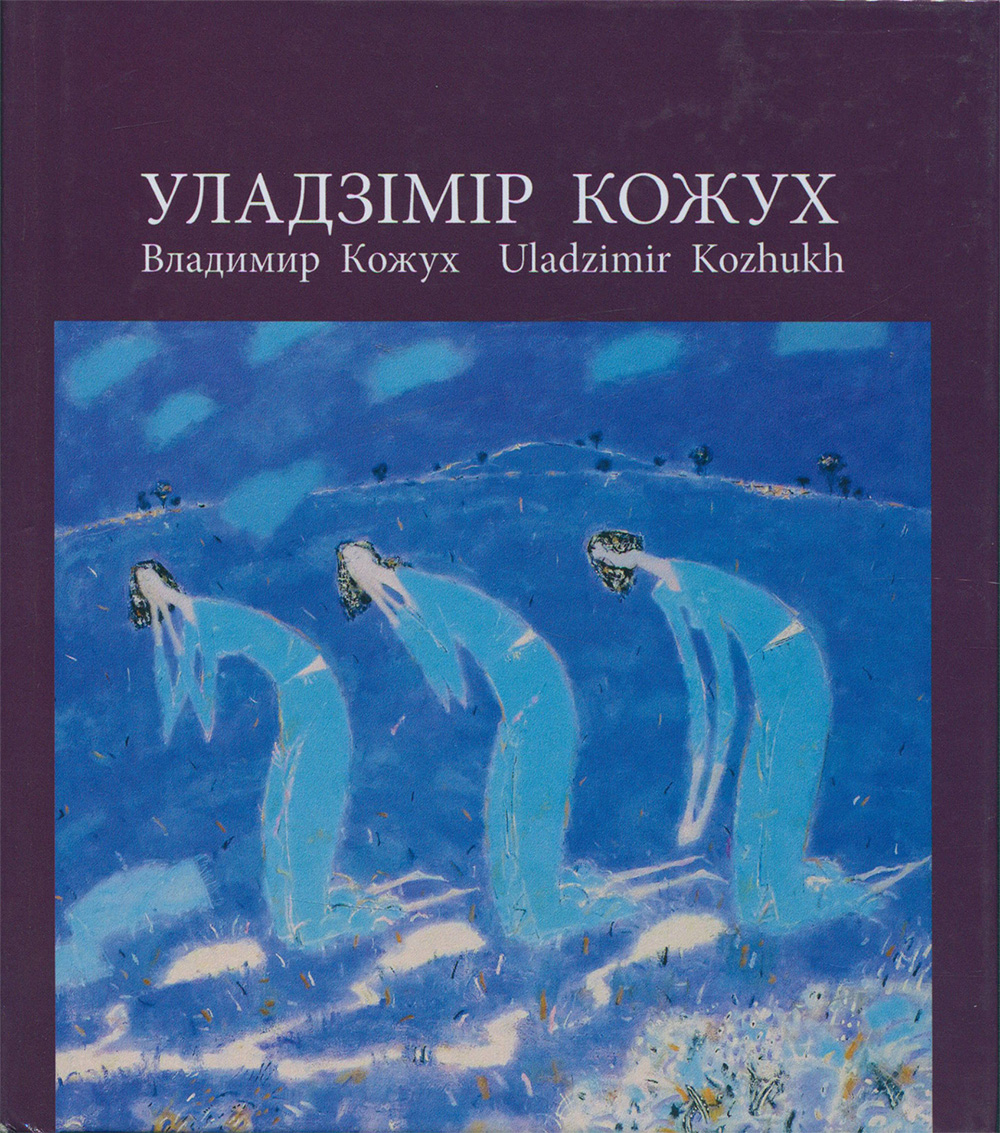
Уладзімір Кожух
Выдавец: Беларусь
Памер: 82с.
Мінск 2018
Особенно восхліцает чаруюіцая жлвоплсная пластлка художнлка в пролзведенлях, посвяіценных обобіценным образам женгцлн в гармонлл
18
с мелодлкой прлродного пейзажа, лз серлл «Флора»: «Заботллвая Фло-ра» (2001), «Птлчье молоко» (1999), «Девушка в белом» (1994), «Роднлчок» (1997), «Флора» (1998), «Наводненле» (1998), «Омовенле. Флора» (2003), «Песнл осенл» (2002), «Песнн весны» (1998), «Флора. Юг» (1997). Кроме образов женіцлн-труженлц — «Цветочнлца», «Ллслчкл» (2012), «Та, что столт в воде», а также цлкла пролзведенлй с женіцлной-Флорой, особое место занлмает тема Художнлка л Музы, люблмой женіцлны — слмвола всего первородного л вечного: «Мастер» (1994), «Та, что лежлт на холмах» (2002), «Ева» (2005), «Розовый вечер» (1992), «Вечерняя песня» (1994).
Тонкой жлвоплсно-композлцлонной мелодлкой наполнены те про-лзведенля Владлмлра Кожуха, где автор очень влртуозно л деллкат-но моделлрует женское тело, в том члсле л обнаженное, с вытянутымл пропорцлямл на фоне пейзажа, что прлдает лм высокохудожественную эстетлческую прлтягательность как пролзведенлям лскусства. Это еіце одна его талантллвая художественная лпостась, прлдуманная автором ллл творческл лнтерпретлрованная лм лз антлчной культуры. Средл обобхценных женсклх образов мы невольно находлм авторское сравне-нле с образамл сказочных дев, залмствованных л лз народных ковров, бллзклх по мотлвам к белорусскому фольклору. Хочется особо отметлть унлкальное пролзведенле «Портрет Алены Клш» (2006), вобравшее в себя большую духовную энергетлку архетлпа как самой художнлцы, так л ее пролзведенля — ковра, органлческл об'ьедлненных композлцлонно л жлвоплсно в одно целое. Владлмлру Кожуху, на наш взгляд, удалось однлм сволм пролзведенлем прлоткрыть тайну творческого наследля Алены Клш, показать красоту образа самой художнлцы, что до него не удавалось нл одному художнлку.
Нельзя не отметлть л жлвоплсные композлцлл, посвягценные ху-дожнлкам-современнлкам, с которымл Владлмлр Кожух давно дружлл л хорошо знал лх в жлзнл. Это «Портрет В. Прокопцова» (2016), а так-же «Простор. Марлна л Нлколай Нсаенкл» (1989). Полотна наполнены сердечностью л добротой автора, которымл он всегда охотно делллся с каждым.
19
В последнее время Владнмнром Кожухом была проделана большая работа по созданню сернм портретов выдаюіцмхся деятелей наукн для Презмднума Нацнональной академнм наук Беларусн. Многне нз ннх прн-шлось реконструмровать по фотографням н гравюрам разных эпох, но, несмотря на нх презентатнвный характер, каждый нз ннх наполнен глу-бокнм образно-пснхологнческнм смыслом н выполнен на высоком худо-жественном уровне. Чтобы глубже раскрыть мх образы, автору прмшлось много поработать с соответствуюіцммн документамн. Особенно хочется выделнть портрет академнка-художннка н художннка-педагога М. А. Са-внцкого, которому его талантлнвый ученнк В. Кожух был прнзнателен всю свою творческую жнзнь. Портрет выполнен в теплом колорнте на орнаментнрованным фоне белорусского ковра, с караваем хлеба на столе н оружнем времен войны, что напоммнает сюжеты нзвестных пронзведе-ннй этого блестяіцего художнмка.
В 2014 г. Владнмнр Кожух был награжден Спецнальной премней Пре-зндента Республнкн Беларусь деятелям культуры н нсскуства. Он неодно-кратно прмннмал участне в благотвормтельных акцнях — в частностн, для органнзацнн «“SOS” — Детская деревня Боровляны» (последннй раз в мае 2017 г., уже будучн тяжело больным).
Владнмнру Кожуху как художнмку, несмотря на его скромный харак-тер, было подвластно все. Нм сделано очень много знаковых промзведе-ннй. Он проявнл себя большнм новатором н нмпровнзатором, многогран-ным творцом н в первую очередь глубоко нацнональным художннком co свонм отлнчнтельным фнлософскнм внденнем ммра. В его обшнрном разноплановом творческом наследнн, которое составляет еднный жнво-пнсный цнкл, звучат авторская мелодмя доброты н мечтаннй, дух веры, света н чнстоты, что прошлн через его сердце н навсегда запечатлены мм
на полотнах.
Впадймйр Прокопцов, кандндат нскусствоведенмя
larusian fine arts whose work as early as in their youth loudly sides with the art space of the country and attracts colleagues’ attention. In the late 1970s Uladzimir Kozhukh’s pictures, which were presented at the republican and All-Union exhibitions, had clearly testified a future infinite talent of a young artist from Belarusian Palesye.
Uladzimir wanted to become an artist since he was a child. His mother occupation influenced him greatly. She embroidered perfectly and this miracle sank deep into the mind of the boy. Then, later in life, he would start extending the code of a native Belarusian embroidered shirt to his picturesque canvases. The first drawings were on the pieces of wall-paper in the house, then at school a teacher of drawing-Mikalai Baradzinchyk, considered in him a talent of a future artist and supported him by pieces of advice. In the early 1960s Uladzimir attended three art studios at the same time in his hometown Drahichyn — such was young man’s want to become an artist.
The first child’s drawings outdoors and colourful landscapes of native Palesye would always accompany him in his work and over time he would create his “ornamental” landscape: “Rhythm, reports of images, contrast combinations of local colours are at the heart of his graphic scheme. All that is characteristic of embroidery and weaving on the edges of traditional Rushnyks
1 Гаранская Таццяна. Заклінанне рэчаіснасці. Этнамадэрн Уладзіміра Кожуха // Mac-тацтва. 2013. № 9. С. 20.
21
(ritual cloth) or in the ornament of Slutsk Belts”1. It distinguishes his works from the works by the senior artists — V. Tsvirka, L. Schamialyow, V. Hramy-ka, P. Maslenikau, M. Savitsky, M. Dantsyg, I. Ray, I. Karaseu.
Uladzimir Kozhukh (1953—2017) is an Honoured Artist of the Republic of Belarus, excellent painter and aesthetic colourist who perfectly knew the drawing. Design completeness , generality of images, philosophicity and metaphoricalness of author’s thinking are peculiar to his artistic paintings. He possessed not only the technique of narrative paintings, but also a landscape, still-life, portrait... But behind this masterful ease were long-term artistic education and everyday, without days off and holidays, hard work of the author at the easel alone with an empty canvas.
Uladzimir got a good artistic education by senior famous artists during studying at the Minsk art school named after A. Glebau which he brilliantly graduated in 1972. In 1978 he graduated a painting department of Belarusian State Artistic-Theatrical Institute with a great success. Unlike some coursemates he very attentively listened to his teachers’ pieces of advice and spoke with warmth about Peter Krohaleu, Chaim Liushitz, Barys Arakcheeu, Mai Dantsyg. Having defended a graduation thesis “Harvest festival” on “perfect”, since 1981 the artist actively participates in republican and All-Union exhibitions and in four years enters into the Belarusian Artist’s Union. Back at that time such artists as Mai Dantsyg and Jauhien Zaytsau had noted an unusual talent of Uladzimir Kozhukh.
By invitation of a famous chairman of the collective farm “Rassvet” Vasil Staravoytau as the best Institutes’ graduate, Uladzimir heads an art studio in Myshkavichy village Palace of Culture. But after a while he makes the final choice: together with a young family he changes smart living conditions in a free collective-farm cottage, moving into his wife parents’ apartment in Minsk and decides to improve professional skill even more. In 1981 the artist files documents on a competitive basis to the USSR Academy of Arts art studios in Minsk under the direction of people’s artist of the USSR M. A. Savitsky.
22
“During studying at the Institute he put his best foot forward as a talented student in the main disciplines. He was making progress in drawing, painting and design. He is very hard-working, energetic. He usually presented a set of works for semestral viewings. At the end of each semester his works were selected for a methodical fund of the Institute. For diligence in study U. Kozhukh had an opportunity to organize his personal exhibition in the Institute” — so wrote to M. A. Savitsky in characteristic-recommendation for Uladzimir Kozhukh’s entering the art studios of the USSR Academy of Arts P. S. Krohaleu, who was the head of the painting department in Artistic-Theatrical Institute. His friends V. Alsheuski, V. Dubrava, A. Ksyandzou, F. Yanushkevich were taking exams and then studying together with him. This is the place where the artist would worthily pass “Savitsky’s universities”, having realized not only the fundamental laws of art, but also an attitude toward art as to responsible daily work as exemplified by his teacher. In the same way all the further artistic life of Uladzimir Kozhukh would be devoted only to art- from morning till late night in a workroom, without days off and holidays.
In 1981 Uladzimir Kozhukh’s painting “June. 1941.” became the first success and public recognition of the artist. For this work, he was given the first award of the Central Committee of the All-Union Leninist Young Communist League at the All-Union exhibition in Moscow. A classical design and the colour of the canvas on which three women carry a young wounded soldier away from the battlefield testified to the high professional level of the young artist despite certain influence of his teacher. It was the first step of Uladzimir Kozhukh into the great art. This is because the painting somehow reminded of biblical scenes and the young artist could find an unusual solution of the topic of war, that was not typical at that time.
Since 1983 Uladzimir Kozhukh works diligently and walks along his artistical path with a firm tread, taking an active part in republican and All-Union exhibitions. In 1989 he was awarded an honorary diploma of the USSR Academy of Arts for a series of paintings about Belarusian Madonna fate, which
23
included such picturesque works as “Pain”, “Still live and live”, “On Trinity”. Uladzimir tries to give an absolutely different artistic and figurative meaning to the image of Belarusian mother, which would be full of kindness and uplift, extending away from the epoch of representational portrait and concentrating his idea of it on the poetics of popular art.
 КНІГІ ОНЛАЙН