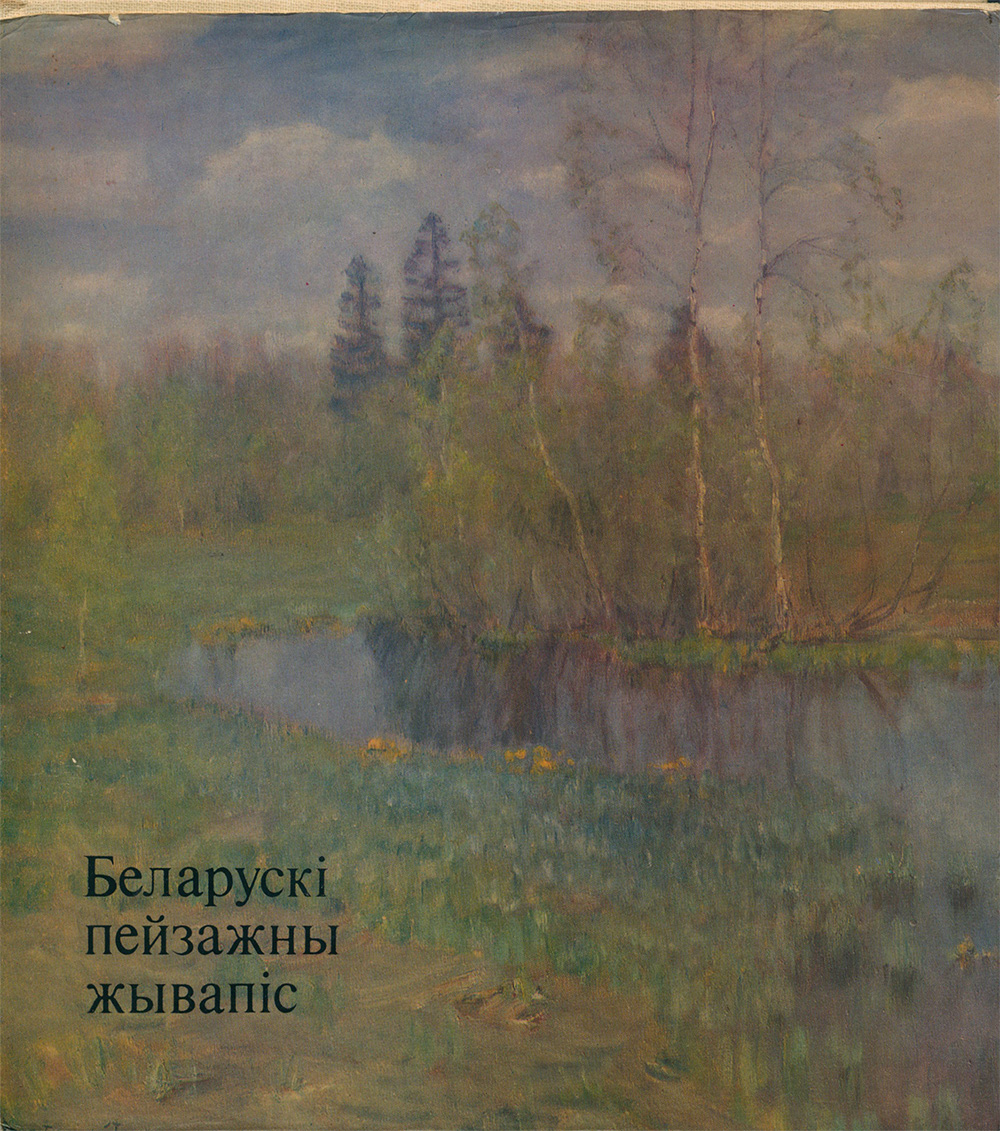
Беларускі пейзажны жывапіс
Выдавец: Беларусь
Памер: 172с.
Мінск 1982
A.	A. Malischewski Pfliigen
A. A. Malishevsky Labranza
144
В.	Ф. Сумараў Зямля маці. 1978 Палатно, масла. 180x160
В. Ф. Сумарев Земля матерм V. F. Sumarev Mother’s Land V. F. Soumarev La terre maternelle W. F. Sumarew Land der Mutter V. F. Sumarev Tierra materna
145
.7. Д. Шчамялёў Ліставей. 1978 Палатно. масла. 170X142
Л. Д. Шемелев Лнстовей
L. D. Schemelev Leaves Blowing
L. D. Chtohemelev La chute de feuilles
L. D. Stschemelew Blatter im Winde L. D. Schemeliev Remolinos de hojas otonales
Нсторня белорусской пейзажной жпвоппсіі неотделнма от нсторнп развнтня всего советского нзобразнтельного нскусства. йстокн ее зарождення іі формнровання связаны с творчеством такнх художннков конца XIX века, как А. Горавскнй. Н. Снлнвановнч, Г. Вейсенгоф, С. Сестженцевнч. Соцнальные проблемы впервые затронуты в творчестве нменно этнх художннков.
Велнкая Октябрьская соцпалнстнческая революцня открыла народу Белорусснн шіірокую дорогу к духовной культуре. Представіілнсь самые благопрнятные возможностн для развнтіія всех вндов нскусства, в том чнсле н нзобразнтельного.
Довоенный пернод в развнтнн белорусской пейзажной жнвопнсн отлнчается лнрнческой повествовательностыо. Больпшнство работ носіглп характер натурного этюда н в основном отражаліі красоту прнроды, городскнх мотнвов. Однако значнтельное вннманне уделялось л теме соцналнстнческого стронтельства, велнкнх соцнальных преобразованнй. Эта тема отражалась в творчестве В. Кудревнча («Углубленне Орессы»), С. Лн («Колхозная электростанцня»), Г. ІІзергнной («Колхоз «Новый путь») н др.
В таком же направленнн развнвался пейзаж п в 50е годы. В экспозііцнн выставок он заннмал несколько второстепенное место, поскольку картнны этого жапра оставалнсь попрежнему на уровне этюда с натуры. Вместе с тем нельзя сказать, что пейзаж в этн годы не нмел своего самостоятельного значення. Пронзведенпя В. БялыннцкогоБнрулн, В. Кудревнча, Б. Звнногродского, а также Н. Воронова, С. Каткова, В. Цвнрко достойно представлялп белорусскую пейзажную жнвопнсь не только в республнке, но п за ее пределамн.
Характерной чертой в развнтнн нзобразнтельного пскусства Белорусснн в послевоенный пернод является актнвная творческая деятельность художннков областных центров. ІІнтереснымп пейзажнстамп показалн себя художннкн пз Вптебска — В. Дзежнц, М. Мнхайлов, А. Корженевскнй, В. Кухарев; нз Гомеля — Б. Звпногродскнй, В. Казаченко, В. Рыкалпн. Тонкой
наблюдательностью, особой теплотой п пскренностью проннкнуты пейзажп II. Данелня пз Бреста, А. ПІкляра нз Могнлева, В. Савнцкого нз Гродно.
Во второй половнне 60х годов пейзажная жнвоппсь Белорусспн поднялась на качественно новую ступень. В этом жанре начннает преобладать пейзажкартнна. От художннков потребовалпсь новые средства ндейносодержательного н образного решення. В развнтнн пейзажной жнвопіісн, в созданніі новых форм, стнлей іі направленнй особо важную роль сыграло творчество такнх жіівопнсцев, как В. К. Цвнрко, В. А. Громыко, II. В. Карасев, П. А. Данелня, С. П. Катков, н ряда молодых художннков, которые посвоему переосмыслплн опыт старых мастеров, а также достнження современного мнрового нскусства.
Своеобразнем стнлевого решення, уменнем нанболее лаконпчно п обобіценно подчеркнуть характерные моменты в прнроде, фнлософскям размышленнем о ее суіцностн выделяются такне пронзведення В. Цвнрко, как «Ганча — земля партнзанская», «Сказ о Полесье», «Беларусь моя» II другне. Болыпннству пейзажей этого мастера прнсуіцн эмоцнональность колорнстнческого н компознцнонного строя, эпнческая шнрота отраження действнтельностн.
Особую форму, неповторнмую внешнеконструктпвную іі образную окраску получнла пейзажная жнвопнсь в творчестве В. Громыко. Болыпннство его пронзведеннй («Красные землн Полотчнны», «Браславіцііна», «Льны белорусскяе», «Глубелька — сердце Голубых озер Белоруссмн», «Октябрьскнй мажор» н др.) выполнены как бы с высоты птнчьего полета. Каждая работа насыіцена глубокнм содержаннем, настроеннем, лнрнкой, драматнзмом н патетнкой»
Пейзажный жанр в белорусском іізобразптельном нскусстве представлеп н многнмн другііміі жпвопіісцаміі. Средн ннх — Л. ІЦемелев. В. Сумарев, Л. Дударенко, П. Масленнков, Б. Аракчеев, Г. Ваіценко, В. Версоцкнй, В. Мпнейко, М. Плужннк, А. Марочкнн н другне. Каждый пз нпх вноснт свой лнчный вклад в его дальнейшее развптне п обогашенне.
158
The story of Byelorussian landscape painting is closely linked with the development of Soviet visual arts as a whole. Its genesis and formation are associated with creative activities of such artists of the late XIXth century as A. Goravski, N. Silivanovich, G. Weissengoff, S. Sestzhentsevich who were the first to tackle social problems in their art.
The Great October Socialist Revolution offered Soviet people ample opportunity for spiritual selfexpression and allowed the development of all kinds of art including the fine arts.
The prewar period in Byelorussian landscape painting is marked for the lyricism of presentation. The majority of canvases were of “sketch from nature” character featuring, in the main, the beauty of nature and urban motifs. At the same time considerable heed was paid to the theme of socialist construction and profound social transformations. These features can be well traced in the works by V. Kudrevich (“Deepening of the Oresse”), S. Lee (“Kolkhoz Power Plant”), G. Izergina (“Kolkhoz “Novij Put”), etc.
The same trend dominated in landscape painting in the fifties. At art exhibitions landscapes occupied a somewhat secondary place since pictures of this genre were still of “sketch from nature” type. At the same time one cannot say that landscape painting of those days was deprived of individuality. Works by Byelorussian landscape painters V. BialynitskiBirulia, V. Kudrevich, B. Zvinogrodski, N. Voronov, S. Katkov, V. Tsvirko enjoyed considerable popularity both inside the republic and well beyond its borders.
The postwar development of Byelorussian visual arts is noted for an upsurge of creative activities among provincial artists. Quite original are the canvases by painters from Vitebsk — V. Dzezhiz, M. Mikhailov, A. Kozhenevski, V. Kukharev, and Gomel ■— B. Zvinogrodski, V. Kazachen
ko and V. Rykalin. Pictures by P. Danelia from Brest, A. Shkliar from Moghilev and V. Savitski from Grodno are full of subtle power of observation, tenderness and sincerity.
In the late sixties Byelorussian landscape painting entered a qualitatively new stage of development which was characterized by the appearance of “picture type” landscapes. Artists had to look for new techniques of expressing ideas and forming images. Significant contribution to the development of landscape painting, creation of new forms, styles and trends was made by V. K. Tsvirko, V. A. Gromyko, I. K. Karasev, P. A. Danelia, S. P. Katkov and a number of young artists who made ample use of the best traditions of the past and achievements of modern world art.
V. Tsvirko’s works “Gancia, the Land of Partisans”, “Tale of Polessie”, “My Byelorussia” are marked for original stylistic solution, author s ability for laconic and at the same time generalized way of expressing certain features characteristic of nature around us. The bulk of his landscapes are imbued with emotional colouring, compositional harmony and epic scope of presentation.
V. Gromyko’s canvases have a specific form, unique structural and imagebearing colouring. The majority of his works (“Red Lands of the Polotsk Region”, “Braslav Region”, “Byelorussian Flax”. “Glubelka”, “October Mood”, etc.) have the air of having been made from a bird’seye view. Each of these pictures is full of content, mood, lyricism and pathos.
A great number of other Byelorussian painters are working in the genre of landscape painting. Among them are L. Schemelev, V. Sumarev, L. Dudarenko, P. Maslennikov, V. Arakcheyev, G. Vaschenko, V. Versotski, V. Mineiko, M. Pluzhnik, A. Marochkin and others. Each of the above artists makes his personal contribution to a further development of Byelorussian visual arts.
159
L’histoire du paysage bielorusse est intimement liee a celle de Fart plastique sovietique. La naissance et la formation de Fart du paysage sont dues a Foeuvre des peintres de la fin du XIX siecle A. Goravsky, N. Silivanovitch, G. Vayssenhof, S. Sestgentsevitch qui etaient les premiers a aborder les problemes sociaux.
La Grande Revolution Socialiste d’Octobre offre au peuple Faeces a la culture qui s’enrichit grace aux conditions favorables au developpement de tous les arts, y compris Fart plastique de Bielorussie.
Le paysage bielorusse d’avantguerre a un caractere narratif lyrique. Les auteurs des oeuvres, qui sont pour la plupart des etudes de nature, s inspirent de la beaute de la nature et des motifs urbains. Cependant, une grande importance est attachee egalement au sujet de Fedification socialiste, aux grandes modifications sociales, notamment, par V. Koudrevitch (“Approfondissement de 1 Oressa”, S. Li (“La centrale electrique du kolkhoze”), G. Izerguina (“Le kolkhoze “Novy pout”) et autres.
Le paysage des annees 50, oriente toujours vers le meme sujet (Fetude de la nature), occupe aux expositions une place secondaire. Neanmoins, on ne peut pas dire qu’il ne s’est pas forme comme genre a part. Dans cette epoque il est deja dignement represente par les oeuvres de V. BialynitskyBiroula, V. Koudrevitch, B. Zvinogrodsky, N. Voronov, S. Katkov, V. Tsvirko non seulement dans la Republique mais audela. Le trait de Fart plastique bielorusse d’apresguerre est lie avec les activites creatrices des peintres de centres regionaux, dont les plus remarquables sont V. Dzejits, M. Mikhailov, A. Korjenevsky, V. Koukharev de Vitebsk, V. Zvinigrodsky, V. Kazatchenko, V. Rykaline de Gomel. Les paysages de P. Danelia (Brest), A. Chklar (Moguilev), V. Savitsky (Grodno) montrent les qualites d’observation, la tendresse et la sincerite des auteurs contemporains.
Dans la deuxieme moitie des annees 60 le paysage bielorusse s’adoptant au paysagetableau monte dun plus haut degre qualitatif. Le nouveau genre demande aux peintres la recherche de nouveaux sujets et de nouveaux procedes de composition. Le developpement de Part du paysage, la naissance de nouveaux formes, styles et orientations sont particulierement dus aux maitres V. Tsvirko, V. Gromyko, I. Karassev, P. Danelia, S. Katkov aussi bien qu’a la pleiade des jeunes peintres qui ont su assimiler les realisations des vieux maitres nationaux et de Fart contemporain mondial.
 КНІГІ ОНЛАЙН