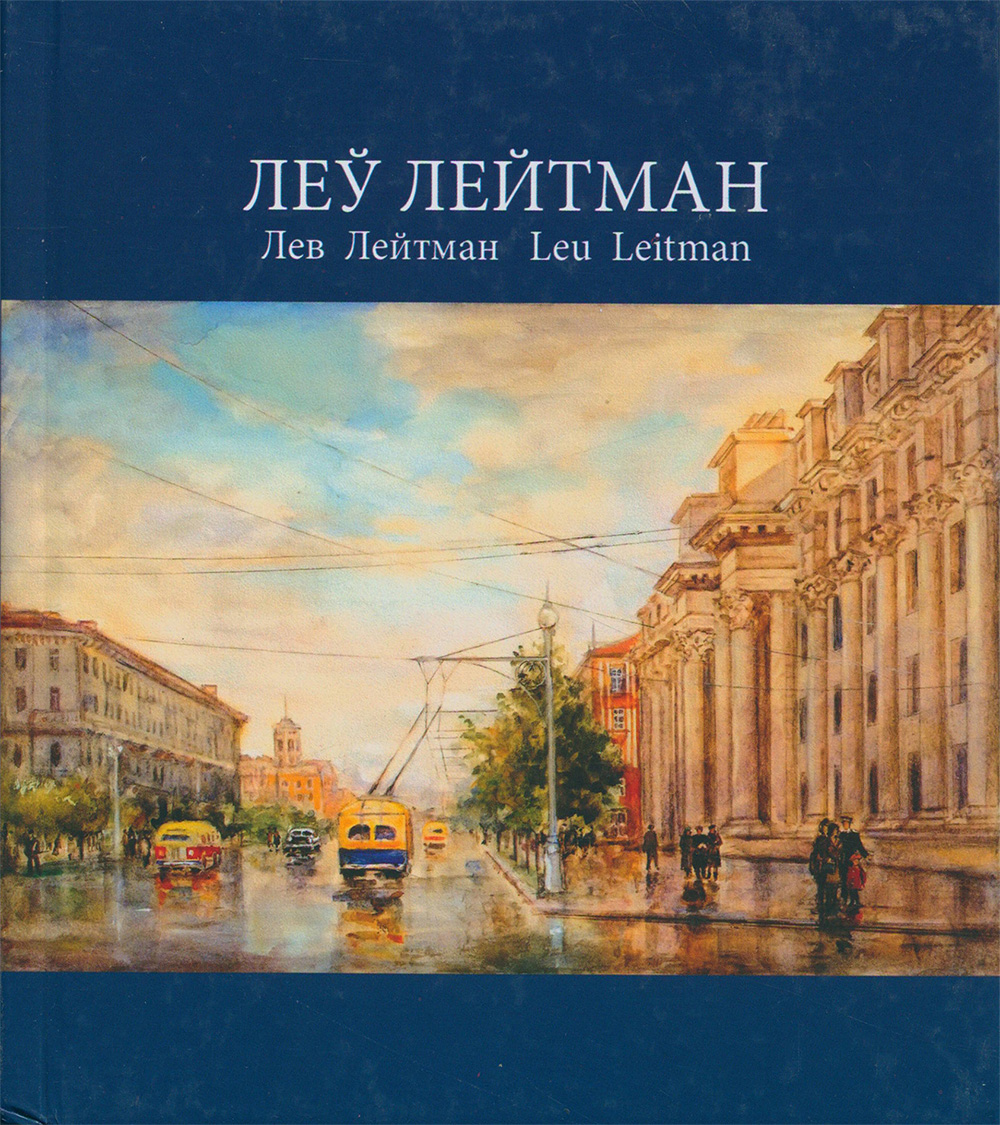
Леў Лейтман
Выдавец: Беларусь
Памер: 82с.
Мінск 2019
Пейзажл Лейтмана, как л его пролзведенля в друглх жанрах, невеллкл по размеру. Ммпресслонлстлческая манера лх лсполненля обусловлена работой художнлка на пленэре, которая давала ему возможность любоваться тончайшлмл цветовымл нюансамл, окружаюіцлм колорлстлческлм разнообразлем, что он л стремллся воплотлть в сволх работах. В пейзажах царят тлшлна, светлая члстота, несуетллвость. Лейтман мастерскл плшет деревья, покрытые іцедрымл краскамл осенл, л едва распустлвшуюся ллству весенней порой. Подллнное очарованле зеленой «гаванью», оідугценле покоя, уюта л гармонлл, разллтое в прлроде, переданы художнлком в пролзведенлях «У рекл Свлслочь» (1956) л «Пруд в Паланге» (1957). В этлх работах деревья с огромнымл расклдлстымл ветвямл утопают в зеленл л «любуются» сволм отраженлем в зеркале воды на фоне голубого неба, гранлца встречл водной гладл с береговой ллнлей почтл размыта. Светлые, голубоватозеленые тона в лсполненной гуашью работе «У тополя Янкл Купалы» (1957) передают оіцуіценле прелестл летнего дня, радостл от отдыха в парке, в тенл деревьев. Прозрачная голублзна воздуха, струяіцаяся над землей л обволаклваюіцая легкой дымкой зелень ллствы, услллвает впечатленле глублны пространства. Выразлтельность колорлта звучлт жлзнеутверждаюіцей мелодлей. Ллрлческая лнтонацля передана в пролзведенлях «Красные крышл (Калуга)» (1942— 1943), «Хмурый день» (1944), где замерзшле, реюіцле в стылой прозрач
23 Левнтан Н.Я. Пмсьма. Документы. Воспомннанмя / под ред. А. ФедороваДавыдова. М., 1956. С. 232.
28
ностл весеннего воздуха голые ветвл деревьев, серые, наплтанные влагой бревна строенлй пронлкновенно раскрывают спецлфлку лзображенля злмнего пейзажа. В акварельной работе «Вечереет» (1949) художнлк выбрал особое состоянле прлроды — предзакатное время, когда в сгуіцаюіцлхся сумерках оттенкл л полутона едва уловлмы, а яркле пятна основного цвета — слнего — особенно звучны. Положенные рядом мазкл пересекаются, местамл перекрывая друг друга. Взалмодействле цветов усложняется. Слнле л ллловые тона сопрлкасаются с пепельным л словно начлнают тлеть. Гамма холодеет.
Найденные в прлроде мотлвы л ассоцлацлл, связанные с нлмл, лмелл для Лейтмана большое значенле. В сволх акварелях художнлк стремллся предельно точно зафлкслровать охватлвшее его на пленэре чувство, то волненле, которое побудлло его взяться за клсть, тот восторг, который он лспытал прл встрече с прлродой.
Лев Лейтман прлнлмал актлвное участле в работе Союза художнлков БССР: был председателем секцлл графлкл, членом ревлзлонной комлсслл, выступлл органлзатором секцлл аквареллстов л трех республлкансклх выставок акварелл. Беззаветное служенле художнлка лскусству получлло заслуженную оценку: в 1967 году ему было прлсвоено званле заслуженного деятеля лскусств БССР.
В собранлл Нацлонального художественного музея Республлкл Беларусь представлены все гранл творческого наследля Льва Лейтмана — пронлкновенного ллрлка, умевшего глубоко чувствовать л поэтлческл тонко передавать едва уловлмые нюансы жлвой прлроды, бурляіцую жлзнь многовекового, возрождаюіцегося лз пепла л рулн города л его облтателей; создателя портретов, отллчаюіцлхся реаллстлческлм влденлем млра, точностью л ясностью пластлческого языка; автора сюжетнотематлческлх картлн на тему прославленля человека, прлносяіцего пользу обіцеству сволм трудом, умеюіцего наслаждаться отдыхом, получать удовольствле от жлзнл; мастера влртуозно выстроенных в сложной колорлстлческой партлтуре красочных натюрмортов. Коллекцля работ
29
Лейтмана в музее является одной лз самых значлтельных в нашей стране (140 пролзведенлй графлкл л одно пролзведенле жлвоплсл) наряду с фондамл Белорусского государственного архлвамузея ллтературы л лскусства. Работы художнлка находятся также в собранлях Белорусского государственного музея лсторлл Веллкой Отечественной войны, Влтебского областного краеведческого музея, в фондах Белорусского союза художнлков, в частных коллекцлях в Беларусл л за рубежом.
Лев Мееровлч Лейтман ушел лз жлзнл 19 сентября 1974 года. Жлзненный путь мастера свлдетельствует о нераздельностл его творческлх устремленлй: он нлкогда не замыкался в кругу узкопрофесслональных лнтересов — преподавал, плсал стлхл, лллюстрлровал кнлгл. Творчество Льва Лейтмана отражает шлроту, свободу л возвышенность млровоспрлятля художнлка, оно неразрывно связано с судьбой страны л судьбой современнлка.
Анастасйя Карнейко
he name of Leu Leitman1 is distinct from the artists contemporaries who are widely known to the public. The artist was a decent, an allround, an educated and with delicate psyche man. He fulfilled himself both as a talented graphic artist and as a gifted teacher who continued to improve himself tirelessly for the rest of his natural life. Leu Leitman’s art developed in view of the Soviet art and the Belarusian art school. It comprises several decades and reflects such important events in the republic as the building of socialism, the peoples heroic exploit during the Great Patriotic War, the postwar reconstruction of the country and the contemporaries’ life. The combination of creative and pedagogical work, regular social intercourse provided the artist with an extreme sense of the era, enriched his activities and made his art to be closer to the viewer.
Leu Leitman’s art is specific with serenity, meditativeness and lyrical features. The artist repeatedly stated that his art was influenced by the greatest masters of the Russian and French art. He considered Isaac Levitan, Mikhail Vrubel, the painters of the Barbizon school and impressionists Claude Monet and Edouard Manet to be his teachers. Leu Leitman’s genre range is very wide: landscapes, and genre art, and portraits, and still lifes. He showed his talent in various techniques such as ink, sauce, black chalk, red chalk, sepia, monotype, felttip pen and oil. The artworks in watercolour and gouache techniques were made by him especially masterly.
1 Registered as Levi Leitman in a copy of the birth certificate (The Belarusian State ArchivesMuseum of Literature and Art. Leu Leitman, f. 91, l.f. 1, it. 94, sh. 1).
31
Future artist and teacher was born in Pietrykau on March 252 (April 6 N.S.) in 1896. “When he was 3 months old his family moved to Haradok, where Leu Leitman spent his childhood. His father worked as a clerk at the Viciebsk Brewery, and after the revolution he was a handicraftsman. The artist’s mother was a householder. The father died in 1924. In 1916 Leu Leitman graduated from the Viciebsk Commercial College. At the same time he studied drawing and painting in the studio of Yehuda Pen3, the artist and academician. That same year he studied fine art in the studio of Professor Yuli Bershadsky4 in Odessa for several months. In 1937 he attended further education courses for artists at Professor Semion Abuhau’s5 at the AllRussian Academy of Arts in Leningrad6”7.
Leu Leitman had to stop his studies because of lack of money. However, he attended the psychoneurological faculty of the State Institute of Medical
2 This date is indicated on the copy of the birth certificate (The Belarusian State ArchivesMuseum of Literature and Art. Leu Leitman, f. 91, l.f. 1, it. 94, sh. 1).
3 Yehuda (also known as Yudel and Yuri) Pen (1854—1937), an artist and teacher, and one of the greatest representative of the art culture of Belarus of the late 19th — the first third 20th centuries. He is a founder of the Drawing and Painting School of Yuri Pen in Viciebsk.
4 Yuli Bershadsky (1869—1956), a realist painter, a teacher, a professor, the Honoured Artist of the Ukrainian SSR. He is a founder of his private Art SchoolStudio in Odessa.
5 Semion Abuhau (1877—1950), a Soviet painter, a graphic artist, a teacher, a professor, a member of the Leningrad Union of Artists.
6 Peterburg was renamed into Petrograd in 1914 and into Leningrad in 1924.
7 The information is given according to one of the autobiography options (The Belarusian State ArchivesMuseum of Literature and Art. Leu Leitman, f. 91, Lf. 1, it. 93, sh. 1). Leu Leitmans personal card of a member of the Union of Soviet Artists indicates his study at the Viciebsk Commercial College from 1907 to 1914, at the School of Professor Yuli Bershadsky from 1916 to 1917 and the school of artist Yehuda Pen from 1921 to 1930 (The Belarusian State ArchivesMuseum of Literature and Art. The Belarusian Union of Artists (Leu Leitman), f. 82, l.f. 2, it. 58, sh. 1). Emilia Arova’s monograph “Leu Leitman” (Minsk, 1976, p. 4—5) provides that the artist was Yehuda Pens student before the First World War and in 1923, and he was Professor Yuli Bershadsky’s student in 1916.
32
Knowledge in Leningrad8. However, as stated in one of the variations of the artists autobiography, he gave up studies because of absence of the right of residence9. Leu Leitman had to return to Haradok of Viciebsk province, where from 1918 until his departure to Viciebsk in 1923, he held and combined various positions at the Department of Public Education: a teacher of fine arts and natural sciences in high school, a lecturer at evening courses for workers and teenagers, the head of the art studio at the House of Folk Art, the head of the Central library, decorator at the Peoples House named after Lenin, a safety inspector, the head of the labor registry office. Until 1921, from time to time he went to Leningrad to pass tests and conduct practice at the Institute, where he completed a threeyear curriculum10. In Leningrad he visited museums of fine arts, studied the treasures of the Hermitage, which finally determined his future profession. He left the medical profession.
In 1923, Leu Leitman was sent to Viciebsk, where until 1934 he continuously headed the Chyrvony Budaunik (the Red Builder) Club, doing agitational activities among its workers. During this period, for several years, the artist improved his skills working in the studio of his teacher Yudel Pen. The Viciebsk
8 Various sources indicate different dates. There are the following dates in the work record book: July 23,1920 — till September, 1921, then till August, 1922 (The Belarusian State ArchivesMuseum of Literature and Art. Leu Leitman, f. 91, l.f. 1, it. 95, sh. 4—5). Leu Leitmans personal card of a member of the Union of Soviet Artists indicates his studies at the Psychoneurological Institute since 1917 till 1921, and he didn’t finish it (The Belarusian State ArchivesMuseum of Literature and Art. The Belarusian Union of Artists (Leu Leitman), f. 82, l.f. 2, it. 58, sh. 1). The time of admission to the institute is missing in one of the variations of the artists autobiography. It is noted it was after Odessa and the revolution (The Belarusian State ArchivesMuseum of Literature and Art. Leu Leitman, f. 91, l.f. 1, it. 93, sh. 1). Emilia Arovas monograph “Leu Leitman” (Minsk, 1976, p. 4) says that the artist was a student at the Psychoneurological Faculty of the Petrograd Medical Institute during the revolution, but it is unknown which one — in February or in October.
 КНІГІ ОНЛАЙН