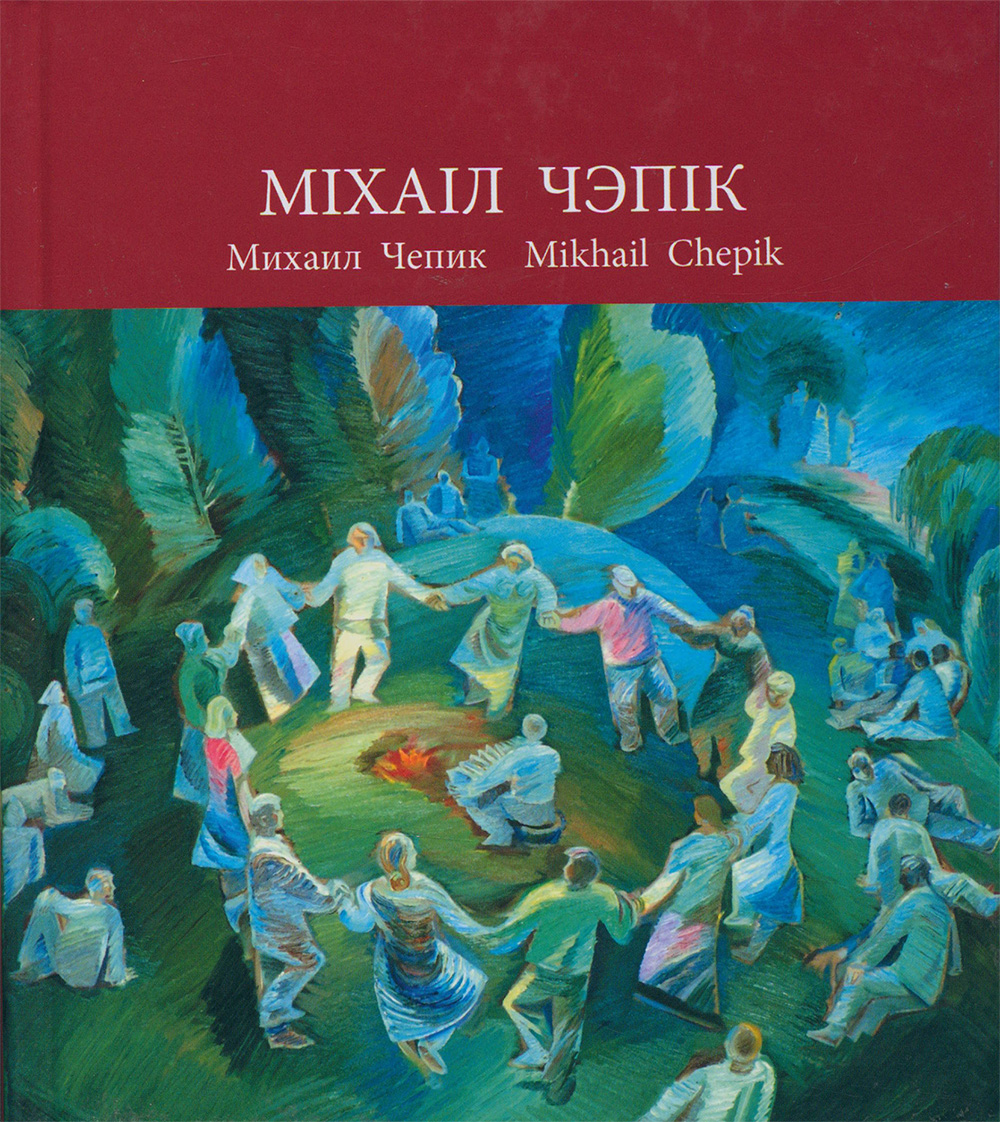
Міхаіл Чэпік
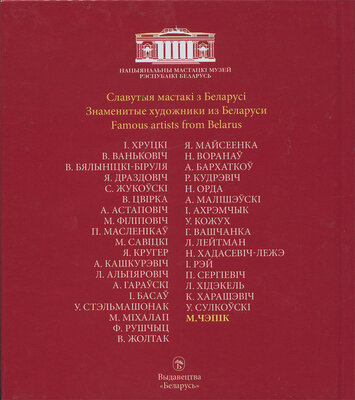
Выдавец: Беларусь
Памер: 98с.
Мінск 2021
38
Lysik. The output of creative energy was embodied in his easel paintings and watercolors.
Mikhail Chepik created his own noncanonical image of Minsk. He was capable of finding unexpected angles — whole panoramas of the city, often from a bird’seye view, as if from the top floor of the Opera House, where the theater workshops were located.
He managed to capture “genius loci” (spirit or genius place) in the Soviet new Minsk, in his sketches and watercolors Minsk arises in the 1960s and 1980s, actively developes, changes literally in front eyes: wooden barracks disappear, goats and cows that used to graze in city squares easily disappear, new highways and streets appear, Svislach is dressed in concrete embankment. He enthusiastically keeps an artistic chronicle of the city transformation, takes pain the demolition of the oldNiamihain the 1970s very personal. In the late 1970s, construction of the metro and new neighborhoods began (painting “Seventeenth Century, Twentieth Century”, 1989).
Chepik walked the whole city that used to be very green and not so vast. He observed and made sketches of Minsk’s transformation into the new socialist city. He was also interested in special vibe of the city, weather changes (“Minsk. Svislach. Hoarfrost”, 1960), the effects of electric lighting that gave the festive mood of the Round Square, the autumn beauty of the parks over the Svislach, the sunrise in the city from the roof of the Opera House. The mundane dullness of the brick fivestory buildings and concrete panels of the 1960s turned into a festive extravaganza of the magical Dream City. “Is this Soviet Minsk?” — you may ask yourself, looking at his gouaches (he is a theater artist, he loved this technique) and watercolor sketches. Joy and admiration of a peaceful life after the war (felling lucky to survive after it) dominated his work until the mid1990s.
In retirement, he worked every day, striving to dissolve in the beauty of nature that brought him peace, harmony of the soul and inspiration. In the harsh 1990s, the consequences of a military concussion trauma began to cause dizziness and headaches. The war did not let him forget about itrself: he had to
39
spent several days in a swamp and got a lung disease, excessive nervousness and sensitivity. He could never walk past a wounded bird or an abandoned animal with this condition.
His best paintings were bought for a pittance by Italian gallery owners during the interest boom for Soviet art. The loss of faith in the need of high art, the inability to earn money as an artist, led him to depression. He became gloomy, unsociable and irritable due to the illness. He practically stopped going to the studio, worked drew at home and painted small gouaches. Throughout his life, he had two personal anniversary exhibitions for the 50th and 60th anniversaries. For the 75th anniversary he had neither the strength nor the energy to organize the most important and final anniversary exhibition at the Palace of Arts. Mikhail Chepik died on November 22, 20 008.
In 2002, his posthumous exhibition became a revelation for many colleagues. Mikhail Chepik was called a “an artist of a holiday”, a “phenomenon”, articles about him were written by professional art critics Viktar Shmatav and Barys Krepak. “The works of M. Chepik are the love and trust, profound purity and nobility of the outlook on the world, child’s love for the beauty of this world. This is movement, pressure, decorative radiance of color, solemnity of sound, sophistication of lines. Nothing incomprehensible, nervous, complicated”9, — wrote Barys Krepak.
Famous contemporary artists sincerely admired his work. Here is what People’s Artist Leanid Schamialiou said about him: “I will say without exaggeration: Chepik is a unique phenomenon in contemporary Belarusian painting. On the one hand, there is moral natural modesty, on the other, an extremely dynamic, acute modern vision of the world. He never writes off nature, he interprets it artistically. The embodiment of the world where he lives, the attitude to this world, generous and great love for life are in each of his works”.
8 He was buried at the Northern Cemetery in Minsk.
9 Крэпак Б. Бясконца добрае сэрца. Свет узвышаных мрояў Міхаіла Чэпіка // Культура. — 2014. — № 44. — С. 15.
40
The National Art Museum has good, but relatively small collection of his works — 15 paintings and 2 watercolors. In the collections of the Belarusian Union of Artists and of the National Center for Contemporary Arts — 10 and 8 works of the 1960s and 1980s respectively. But most of his legacy located in the collection of the artist’s family. There are more than a thousand of painting and graphic works in his former workshop studio.
During his lifetime, several articles about Chepik were published in magazines and newspapers and only blackandwhite catalog of his solo exhibition was published10. Contemporaries saw him as an artist of the “second row” — with no awards, titles and any special creative achievements. There is no album with his works yet, just as there are no paintings of him in the museum expositions. The last solo exhibition was in 2005. But the next generation is already interested in the “Chepiks phenomenon”, an artist who stood out the framework and creates his own personal world: bright, magical, solemn and recognizably Belarusian, which cannot be confused with anything else.
Nadzeya Usava, fine art expert
10 Міхаіл Фёдаравіч Чэпік. Выстаўка твораў мастака. Каталог. / уст. тэкст Б. Крэпака.
Курган Славы. 1969
Курган Славы. 1969
Mound of Glory. 1969
43
Плошча імя М.І. Калініна ў Мінску. 1967
Плоіцадь нменн М.М. Калйннна в Мннске. 1967
М.І. Kalinin Square in Minsk. 1967
44
Плошча 8 Сакавіка. 1967
Плоіцадь 8 Марта. 1967
8 March Square. 1967
45
Родны край. 1967
Родной край. 1967
Native land. 1967
46
Мінскае возера. 1979
Мннское озеро. 1979
Minsk Lake. 1979
47
Эскіз дэкарацыі да оперы «Яўген Анегін» П. Чайкоўскага. 1960 Эсмз декорацнн к опере «Евгеннй Онегнн» П. Чайковского. 1960 Scenery sketch for the opera “Eugene Onegin” by P. Tchaikovsky. 1960
48
Эскіз дэкарацыі да оперы «Вертэр» Ж. Маснэ. 1959
Эскмз декорацнн к опере «Вертер» Ж. Массне. 1959
Scenery sketch for the opera “Werther” by J. Massenet. 1959
49
Партрэт артыста балета Міхаіла Грышчанкі. 1970
Портрет артмста балета Мнханла Грліценко. 1970
Portrait of the ballet dancer Mikhail Gryshchanka. 1970
50
Партрэт Віктара Чарнабаева. 1968
Портрет Внктора Чернобаева. 1968
Portrait of Viktar Charnabajeu. 1968
51
Людміла і Святлана. 1968
Людмлла м Светлана. 1968
Lyudmila and Svyatlana. 1968
52
Ля люстэрка. 1974
У зеркала. 1974
At the Mirror. 1974
53
Партрэт былога чырвонагвардзейца І.П. Балтукова. 1967
Портрет бывшего красногвардейца Н.П. Балтукова. 1967
Portrait of І.Р. Baltukov, the Former Red Guard. 1967
54
За намі родная зямля. 1975
За намн родная земля. 1975
Our Dear Land is Behind Us. 1975
55
Жнівень. 1994
Август. 1994
August. 1994
56
Трудовые буднн. 1973
Працоўныя будні. 1973
Working days. 1973
57
Іван ды Мар’я. 1974 йван да Марья. 1974 Ivan and Marja. 1974
58
Дапартызан. 1974
К партнзанам. 1974
To Partisans. 1974
59
Мінскае мора. 1969
Мннское море. 1969 The Minsk Sea. 1969
60
Апаленае юнацтва. 1975
Опаленная юность. 1975
Youth Affected by the War. 1975
61
Лён. 1975
Лен.1975
Linen. 1975
62
Свята ўраджаю. 1972
Праздннк урожая. 1972
Harvest Festival. 1972
63
Мінск. Свіслач. Шэрань. 1960
Ммнск. Свмслочь. Нней. 1960
Minsk. Svislach. Hoarfrost. 1960
64
Кінатэатр «Летні». 1970я
Кннотеатр «Летннй». 1970е
The "Letny” Cinema. 1970s
65
Працоўны семестр. 1975
Трудовой семестр. 1975
Labor Term. 1975
67
Мінскія шляхі. 1982
Мпнскне дорогн. 1982
Minsk Roads. 1982
68
Возера. 1994
Озеро. 1994
Lake. 1994
69
Мой Мінск. 1989
Мой Ммнск. 1989
My Minsk. 1989
70
Век сямнаццаты, век дваццаты. 1989
Век семнадцатый, век двадцатый. 1989
Seventeenth century, twentieth century. 1989
71
Восеньскі прыпар. 1985
Осенняя страда. 1985
Autumn Harvest. 1985
72
Хлебсоль. 1980
Хлебсоль. 1980
Bread and Salt. 1980
73
На смалявіцкіх пагорках вясна. 1984
На смолевмчсклх холмах весна. 1984
On Smaliavichy Hills. Spring. 1984
74
Хлеб. 1982
Хлеб. 1982
Bread. 1982
75
Партрэт барца Н. Ваногеля. 1970
Портрет борца Н. Ваногеля. 1970
Portrait of N. Vanogel, the Fighter. 1970
76
Партрэт паэта Рыгора Барадуліна. Портрет поэта Рыгора Бородуллна. Portrait of Ryhor Baradulin, the Poet.
1986
1986
1986
77
Адвечны pyx. 1974
Вечное двнженне. 1974
Perpetual Motion. 1974
78
На начлезе. 1985
B ночном. 1985
In the Pasture. 1985
79
Пачатак вясны. 1986
Начало весны. 1986
Early Spring. 1986
80
У садзе. 1990
В саду. 1990
In the Garden. 1990
81
Дачны нацюрморт. 1990
Дачный натюрморт. 1990
Country still life. 1990
82
Роздум.1987
Размышленме. 1987
Philosophical thinking. 1987
83
Лагойскія пагоркі. 1991
Логойскме холмы. 1991
Lahojsk hills. 1991
84
Зіма сыходзіць. 1993
Знмауходнт. 1993
Winter is Fading. 1993
85
Лагойшчына. 1991
Логойіцлна. 1991
LahojskLand. 1991
86
Подзвіг народа неўміручы. 1975
Подвнг народа бессмертен. 1975
The Feat of the People is Immortal. 1975
87
Поле. 1996
Поле. 1996
Field. 1996
88
Полымя вайны. 1999
Пламя войны. 1999
Flames of the War. 1999
89
Старонка Странйца
Page
Спіс ілюстрацый Спмсок мллюстрацмй List of illustrations
43 Курган Славы. 1969. Палатно, алей. Нацыянальны мастацкі музей Рэспублікі Беларусь
Курган Славы. 1969. Холст, масло. Нацмональный художественный музей Республнкн Беларусь
Mound of Glory. 1969. Oil on canvas. The National Art Museum of the Republic of Belarus
44 Плошча імя M.I. Калініна ў Мінску. 1967. Папера, акварэль. Нацыянальны мастацкі музей Рэспублікі Беларусь
Плоіцадь мменн М.М. Каллннна в Мннске. 1967. Бумага, акварель. Нацнональный художественный музей Республнкл Беларусь
M.I. Kalinin Square in Minsk. 1967. Watercolor on paper. The National Art Museum of the Republic of Belarus
 КНІГІ ОНЛАЙН