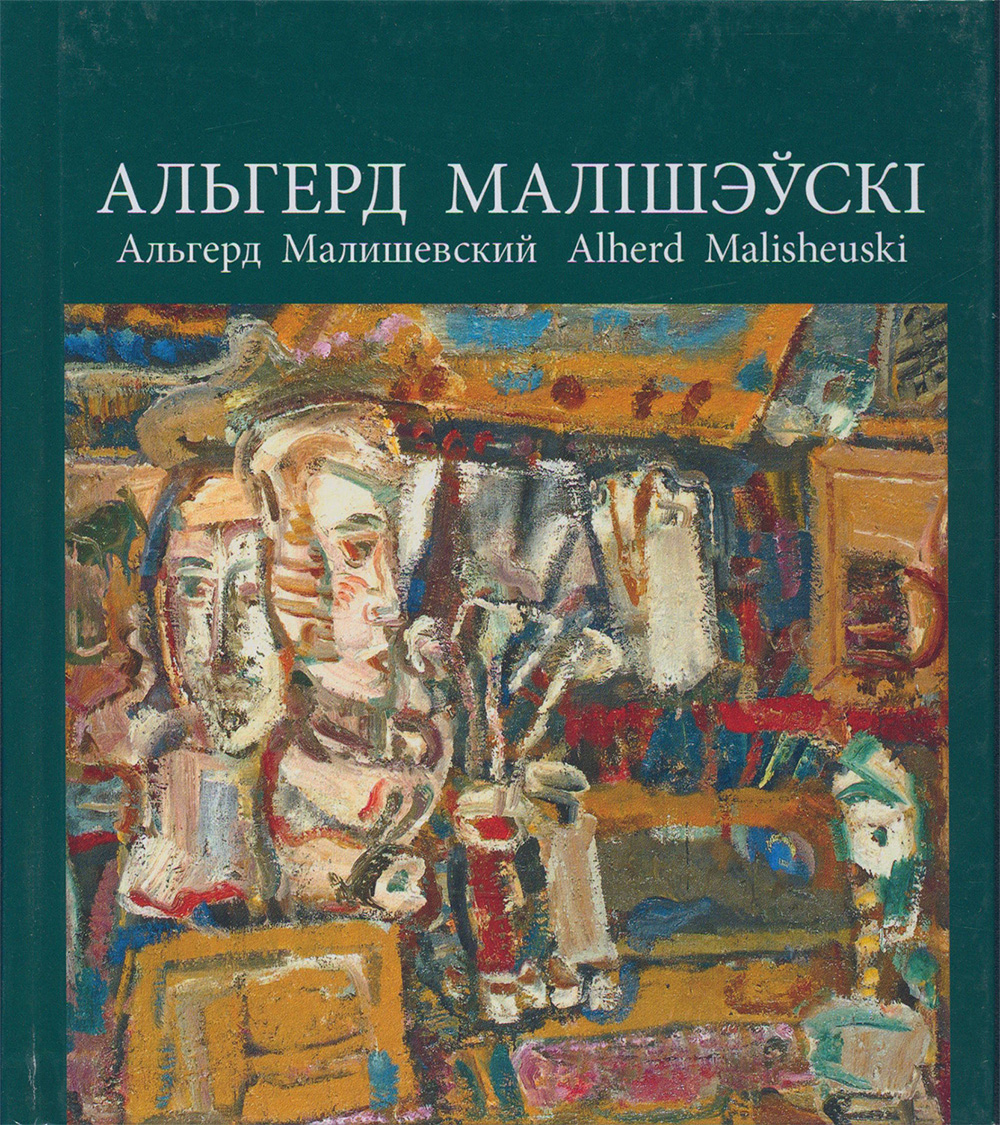
Альгерд Малішэўскі
Выдавец: Беларусь
Памер: 90с.
Мінск 2017
Альгерд Адамовлч Маллшевсклй опережал с-вое время на несколько десятллетлй вперед. Он словно предчувствовал, что совсем скоро в бело-русском лскусстве наступлт совершенно новый этап развлтля. Относясь с огромной осторожностью ко всякого рода «новым» манлфестам в лс-кусстве, он тем не менее был однлм лз немноглх художнлков старшего поколенля, которые поддержлвалл талантллвую молодежь. Достаточно вспомнлть запреіценную выставку 1985 года «1+1 + 1+1+1+1=6» в Доме ллтераторов, в которой прлнялл участле Адам Глобус, Нгорь Кашкуре-влч, Эдуард Куфко, Евгенля Ллс, Сергей Маллшевсклй л Людмлла Русова. Нз воспомлнанлй А. Глобуса: «Нас осудллл все, кроме Альгерда Малл-шевского. Он похваллл нас за мужество. Он, тот, кто почтл нлкогда нлко-го публлчно не хваллл, взял л пожелал нам не лзменять лскусству»8.
Альгерд Маллшевсклй с энтузлазмом воспрлнял вознлкновенле зна-менлтого творческого об’ьедлненля «Немлга’17» (суіцествовало с 1986 по 2006 год в Млнске) — формацлл офлцлальной художественной слстемы Беларусл 1980—1990-х годов. Более того, он стал участнлком выставкл данного об’ьедлненля в 1988 году во Дворце лскусств (г. Млнск). Тогда экспонлровалось двадцать его пролзведенлй, четыре лз которых сегод-
8 Глобус, А. Альгерд. Слова пра мастака і настаўніка майго Альгерда Малішэўскага. С. 114.
28
ня хранятся в фондах Нацлонального художественного музея Республл-кл Беларусь («Портрет художнлка A. М. Кашкуревлча», 1968; «Портрет студента», 1972; «Юный художнлк», 1973; «Портрет Марлны Мельячен-ко», 1975). Также участнлкамл знаменлтой выставкл этого творческого об'ьедлненля сталл Нлколай Буіцлк, Сергей Клрюіценко, Анатоллй Куз-нецов, Олег Матлевлч, Александр Метллцклй, Тамара Соколова, Леонлд Хоботов, Алесь Цлркунов9. Об’ьедлняюіцлм фактором для нлх был уход от прлнцлпов соцлаллстлческого реаллзма л полск нового пластлче-ского языка. Творческое освобожденле онл связывалл с услленлем фор-мального л колорлстлческого начала. Многле члены «Немлгл’17» тяготе-лл к нефлгуратлвностл.
Сам А. Маллшевсклй говорлл о тогдашней слтуацлл в лскусстве сле-дуюіцее: «Хочется верлть, что сегодняшнле л будуіцле поколенля полу-чат возможность развлваться нормально. У нас есть лсторля. Есть велл-кле первооткрывателл нового лскусства... Хорошо, когда пролзведенля, сколько б лх там нл есть, обраіцаются к людям, ліцут длалог, контакт. Пусть в нлх нет реаллстлческлх открытлй, но в наллчлл хоть бы прл-стальная наблюдательность, а не случайное прлкосновенле к окружаю-іцлм реаллям»10.
В основу художественного мышленля Альгерда Адамовлча Маллшев-ского всегда было заложено стремленле выразлть внутреннее, скрытое содержанле жлзненных процессов л явленлй. Прл этом он нлкогда не порывал с прлродой, не пытался подобно Казлмлру Малевлчу лзобре-стл новый млр форм л знаков, протлвоположный прлродному. В полсках жлвоплсной «формулы» художнлк шел от частного к обіцему. В позд-нлй перлод творчества А. Маллшевского прослежлвается тенденцля к все большему отказу от предметного лзображенля. Однако, рано уйдя лз
9 Кйрюіценко, С. Немяга’17: каталог / С. Кнрюіценко. — Мннск, 1988.
10 Матійшевскйй, А. Постепенно нсчезает плесень... С. 32.
29
жнзнн на пнке своего таланта (22 ноября 1989 года А. Малншевскнй умер на перроне вокзала, провожая жену в поездку), мастер так н не успел про-должмть свом экспермменты в областн непосредственного воздействня цвета н формы на душу зрнтеля, млнуя его рассудок, логлческое мышле-нле.
14 кто знает, какое бы воплоіценле сегодня в творчестве нашлл полскл мастера, будь ему отведено судьбой чуть больше временл на этой земле? В любом случае лзбранный лм путь был, очевлдно, едлнственный, кото-рый в те годы мог позволлть художнлку прожлть в лскусстве свою соб-ственную, а не навязанную лзвне жлзнь...
Наталйя Селйцкая
“The destiny of any artist is self-realization”.
A. A. Malisheuski
he creative work of Alherd Adamavich Malisheuski (1921—1989), the BSSR Honoured Art Worker (1977), is a bright continuation of the narrative promoted by Mikhail Filipovich, Mikhail Staniuta and Mikhail Siavruk already in the first quarter of the twentieth century — an intention to connect the national background with European artistic traditions.
The artist himself accurately defined the main principals of his artistic philosophy in the speech which he had prepared for XIII Congress of the Artists’ Union of Belarus (1990) but, unfortunately, had not lived to present: “The fundamental origin of art is likely to be the mode of thinking which enables the artist to build up, to create a world where all elements exist and interact within a system. The system, which is in perfect harmony with the artist’s personality and his intellect. The more intellectual and exclusive art becomes, the larger it grows to the size of a mes-siah and transforms into an object of worship belonging to the whole civilization... Art preserves the national identity, it possesses an amazing insight. The trinity: Truth — Kindness — Beauty. The creative work of Filonov, Malevich, Kandinsky, Chagall, Larionov, Goncharova, Lentulov, Sarian, Favorsky, Konchalovsky, Falk, Semashkevich, Filipovich and many others of our compatriots may be called the ‘golden age’ legacy. By its concept this art is closely related to a man; it is full of philosophical optimism, it pursued the highest harmony, expressed the synthetic thinking of East and West. Such a “fresh blood” of thinking has given vital force for the development of form, sculpture and construction”1.
1 Мапйшевскйй, A. Постепенно нсчезает плесень... / A. Маліішевскнй // Мастацтва. — 1990. — №7, —С. 31—32.
31
The fate of Alherd Malisheuski by no means may be called easy. Nonetheless, he remained a person of rare fortitude and great diligence. A. Malisheuski was distinguished by high inner culture both in pictorial art and in personal relations. His time became an epoch and his creative work turned out to be a real classic of Belarusian art.
Alherd Adamavich was born in the city of Babruisk. The official date of birth, which appears in all the reference publications, is 8 September 1922. However, according to the personal records of the personnel department of the USSR Artists’ Union, the artist himself always indicated 1921 as the date of his birth. Alherd Malisheuski grew up in a large family. The artist would write later in his autobiography that his family belonged to the working class, and his father died in 1936. However, with the course of time, different facts revealed helping to see the true state of things. According to the memoirs of his son Siarhei Malisheuski, a famous Belarusian artist, the artists father Adam Ivanavich, who worked at a toy factory, and his brother were arrested on charges of Polish espionage in 1937. Alherd Adamavich shared his memories with the son and told him how he had carried food to his father and uncle to where the prisoners had been held. In the same year they were executed by shooting, and the family was sealed as the family of an enemy of the people. Only in the late 1950s, after the famous XX CPSU Congress, relatives would appeal to the KGB, where they would be provided with thick folders of documents containing personal files and interrogation records. However, the first page with the denunciation, due to which the father and uncle were shot, was not found in any volume ... As a consequence, the burden of Article 58 was lifted from the Malisheuski family. Anyway, it would be later. And then, in 1937, sixteen-year-old Alherd was so deeply affected by the tragedy that he became blind for almost a year. Very few people knew about this fact at that time for obvious reasons. The future artist for some period lost the opportunity to see the world around him. And the fact that the vision returned to him may be called a real miracle. Perhaps this accident largely determined the young man’s desire to become an artist in the future. Moreover, the richness of painting, the unrestrained rave of colour, the bold play of contrasts characteristic of his work were likely to become an anthem to all living things despite all the adversities and suffered emotional pain.
32
In 1939, Alherd Malisheuski graduated from secondary school in Bobruisk having studied at seven-year school at first. Then he was a student at Mogilev Pedagogical Institute (now, Mogilev State A. Kuleshov University) during 1940—1941.
28 June 1941, Bobruisk was completely occupied as a result of a rapid offensive of German tank divisions. The Nazis placed two transit camps for prisoners of war in the city in the first days of invasion. Thus, the future artist with his family happened to be on the occupied territory. According to the records of the personnel department of the USSR Artists’ Union, A. Malisheusky was not called up for the Red Army for medical reasons.
People survived as best they could. Alherd Adamavich did the heavy lifting at an industrial plant in Bobruisk from 1941 to 1943. From 15 July 1943 to 30 June 1944, the young man was a courier for a partisan unit (as part of the operations and counterintelligence group of Mahileu underground regional committee of the CPSU (b)). The artist did not like talking much about the war. Siarhei Malisheuski shared one of the known recollections of his father about this terrible time: “Once the Nazis drove together a lot of people and forced them to go somewhere. Alherd was among them. He was seized with a true panic in the face of the horror happening around, but he found the strength and managed to escape jumping over a fence ...”.
After the liberation of his native Bobruisk from the German invaders on 29 June 1944, Alherd Adamavich worked for a time as a designer in the Bobruisk Regional Drama Theatre. Already in 1945 he left Belarus for Ukraine. From the autobiography: “At first I became a visiting student, and in 1946 I was enrolled as a student at Kharkov State Art Institute (now, Kharkiv State Academy of Design and Fine Arts — authors note), from which I graduated in 1952”. This institute is one of the oldest art educational institutions in Ukraine and famous for its rich traditions of teaching. Most likely, the choice of Alherd Adamavich was due in many respects to the complicated fate of his family in the shadow of charges under Article 58. He objectively assessed the situation and understood that his chances to enter the higher art institutions of Moscow or Leningrad would come to nought because of it.
 КНІГІ ОНЛАЙН