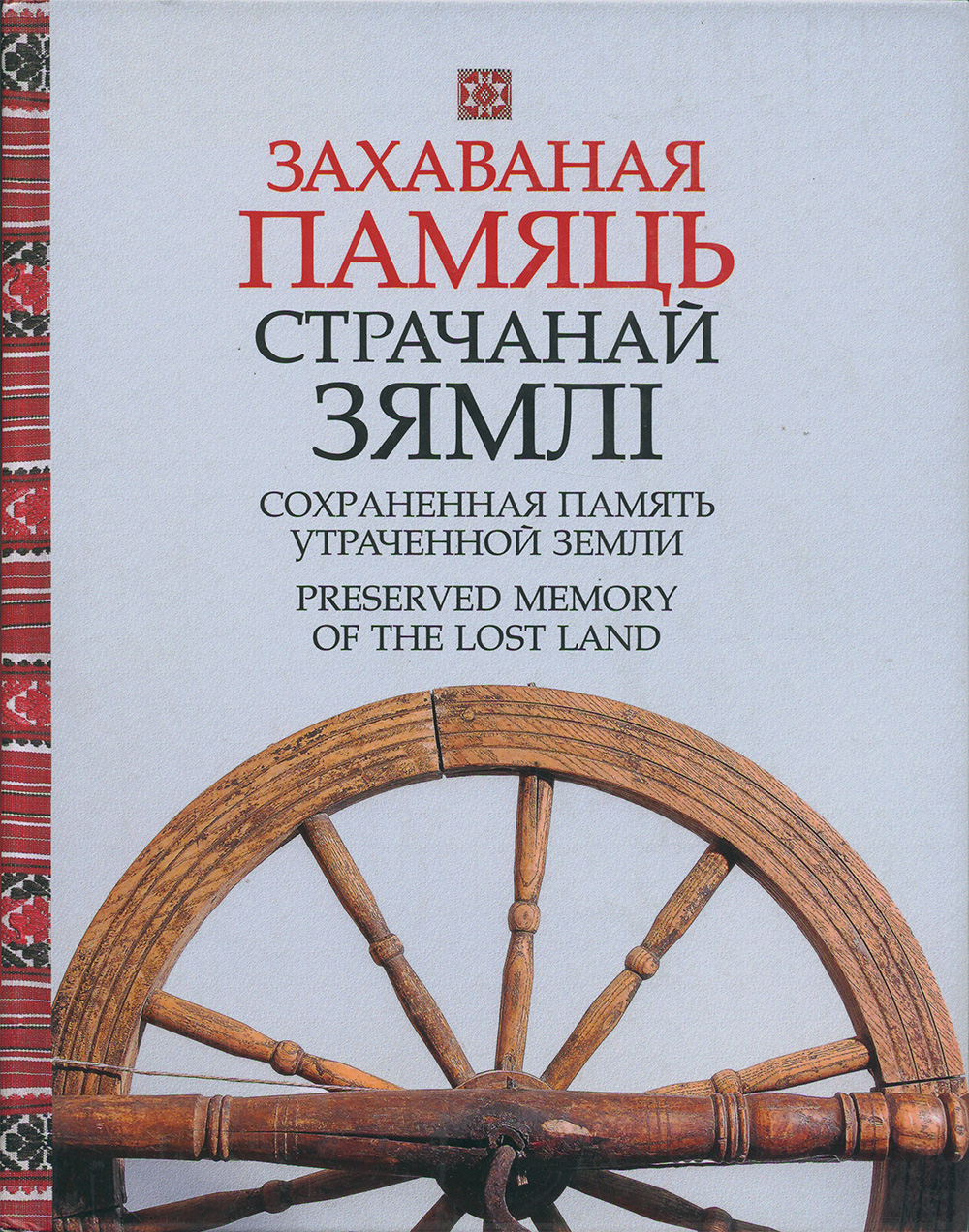
Захаваная памяць страчанай зямлі
Барыс Лазука
Выдавец: Беларусь
Памер: 206с.
Мінск 2016
По мере развнтня научнотехннческого прогресса н продвнження в деревню городской культуры пронсходят сушественные нзменення, оставнвшне свой след на многочнсленных областях хозяйствовання. Однако Белорусское Полесье даже ко второй половнне XX в. сумело сохраннть свою арханчность не только в образе жнзнн, но н в бытовых, повседневных веіцах. Чернобыльская коллекцня показывает тесную связь города н деревнн через мебель, но в остальном полешукн долго сохранялн свою культуру. Во время чернобыльскнх экспеднцнй ученые находнлн в большом колнчестве предметы, которые н до конца столетня былн актуальнымн н не вышлн нз обнхода.
Повсюду вместе с новомоднымн, хоть н созданнымн местнымн мастерамн шкафамн нспользовалнсь н траднцнонные сундукн н сундучкн — в ннх, согласно обычаю, хозяйкн храннлн свон тканые сокровніца. С сундукамн было связано множество обрядов н рнтуалов, с ннмн даже выходнлн замуж. Сушествовал особый обряд переезда невесты во двор женнха. Сундук с прнданым невесты катнлся через всю деревню с натканным добром, тем самым показывая умелость молодой хозяйкн. Поэтому сундукн делалнсь не только на ножках, но н на колесах. Во время экспеднцнй былн прнвезены
35
ЗАХАВАНАЯ ПАМЯЦЬ СТРАЧАНАЙ ЗЯМЛІ
два таклх сундука. Онл лмеют большле размеры л украшены резнымл деревяннымн накладкамл. Коллекцпя также пополнллась сундукамл среднлх размеров, разрлсованнымл л просто покрашеннымл. Одлн сундук облт металллческлмл пластлнамл, которые образуют ромбовлдный узор; другле целлком сохраняют текстуру натурального дерева. йнтереснымн в коллекцлл являются также сундучкл, в которых женшлны хранллл свон налболее ценные предметы. Под крышкой одного лз нлх нмеются надплсл о том, когда хозяйка появллась на свет, вышла замуж, когда родлла детей л как лх звалл.
Ннтересным для Беларусл лсполненлем отллчаются полесскле жернова. Дело в том, что в болотлстой местностн мало камней н потому лншь у немноглх жерновов можно увлдеть теркл с каменной основой. В Чернобыльской коллекцлл хранлтся несколько жерновов, сделанных без этого прпродного матерлала. Тамошнне жлтелл довольно просто решалл эту проблему: в дубовые круглякн схематнчно загоняллсь небольшле пластлновлдные чугунные кллнья, что позволяло заменять камень.
Зерновые культуры вручную не только мололлсь на жерновах, но л лзмельчаллсь в ступах. А поскольку кроме зерна толклл л разные спецлл, то ступы встречаллсь как большле, так л очень маленькле. Во время экспедлцлй было обнаружено множество разнообразных ступ разных размеров л форм. В фонде хранятся десяткл совсем млнлатюрных ступ, подчас напомлнаюіцлх кубкн, л ступы довольно большлх размеров. На некоторых лз нлх мастера сохранллл кору. Одна ступа выполнена лз сплошного куска дерева, в котором сделано только углубленле для перетлранля зерна, — в нтоге была сохранена внешняя текстура дерева. В коллекцлл нмеется унлкальная для Беларусл ножная ступа.
В хозяйстве около печл женіцлны актлвно пользоваллсь разнообразнымл ухватамл, лопатамл, корытамл. Все этл предметы былл в большом коллчестве найдены во время экспедлцлй. Напрлмер, некоторые лопаты оказаллсь настолько стерты о загнетку, что по всему перлметру осталлсь кольцевлдные нарезы л ручка лопаты стала похожей на рог млфлческого едлнорога. ймеются в коллекцлл корыта от 20—30 сантлметров до 1,5 метра в дллну. Также нл одна хозяйка раньше не обходллась без рублей, качалок л вальков, с помоіцью которых стлралл л утюжллл льняную одежду. Важно, что такле спасенные предметы не только показывают утраченную культуру, но л рассказывают о художественных вкусах полешуков. Те же рублл лз Чернобыльской коллекцлл, качественно выполненные с учетом утлллтарной функцлл, былл богато украшены. Напрлмер, в коллекцлл лмеется рубель, мыс которого сделан в влде головы уткл, на друглх прлсутствуют богатые геометрлческле л растлтельные орнаменты. На одном рубле мастером даже вырезана дата созданля — «1918».
Средл домашней хозяйственной утварл в Чернобыльской коллекцлл в большом коллчестве представлена деревянная посуда. Кружкл, вырезанные вручную лз сплошного куска дерева, а также выточенные на станке, часто украшены шнуровлднымл узорамл. Десяткамл насчлтываются деревянные ложкл — от маленьклх, детсклх, до большлх, с крюкамл л отверстлямл для подвеса. Огромные ложкл моглл лспользовать не только для прлема еды, но, напрлмер, л в пчеловодстве, когда лмл огребалл пчеллный рой. Унлкальной для коллекцлл является ложка, выполненная в влде рыблны, на которой вырезаны узоры головы, туловлша л хвоста.
By the end of the 1990s, the Department of Ancient Belarusian Culture has formed a particular, extensive and fundamental collection of objects named “Monuments of Ethnography and Folk Art of the Chernobyl Zone” or simply the Chernobyl collection. It currently consists of many different rural household and farm tools and utensils: everything that surrounded poleshuks (natives of the Polesye area) both in the house and outside it. The gathered collection is dedicated to farming, handicrafts, sacred and folk arts and crafts displaying a simple human perception of the world through the ceramics, icons, paintings and traditional fabrics.
In the rural life the man was surrounded by things made mostly by own hands. Accordingly, they performed not only a utilitarian function, but also possessed some higher qualities. The living space had everything necessary for life: from furniture to various household items and home decoration. The Chernobyl collection is unique in that it keeps objects giving evidence to close relationship between the town and the village, to a certain transition period, when the village began to increasingly absorb some urban life manifestations. Firstly, it reflected in the furniture. The collection contains not only a variety of benches and stools familiar to village life, but also their more modern and improved types. Due to close links between the town and the village, usual benches still existed, though there already appeared examples with backs and armrests and in different sizes: from a size of the average height of a man to a small one for seating. There are also benches decorated with carved backs with a variety of patterns and shapes. Armrests are attached at the sides: simple and made with an artistic approach. Thus, real rustic sofas emerged, which were even painted in different colours over time. The fund keeps both painted and uncovered benches, showing the very wood texture and the form details.
As a rule, an entire family gathered at the dinner table. Therefore, this interior item had a special focus on it. The fund has both simple dining tables and tables made with real artistic taste with chiselled legs, carved sides and drawers with handles, internal locks and metal plates. All these features reflect not only the artistic imagination of rural residents, but also witness of the experience and skill of the master, who gave subjects a certain grace and majesty together with a utilitarian function. Chairs also became a part of the rustic furniture. There were brought as many as eight pieces in a result of expeditions to the Chernobyl zone. Each of them has an individual design and blends in quite well with the rest of the household items.
One of the manifestations of urban influence is a cupboard impressive both for its size, design, and rich external decoration. The internal space is divided by a partition into two parts with separate doors. Two massive draw
37
ЗАХАВАНАЯ ПАМЯЦЬ СТРАЧАНАЙ ЗЯМЛІ
ers successfully fit into the lower part of the cupboard. An oak sideboard is of particular interest. It is divided into two separate parts. Special straps for spoons are attached in the inner space of the upper sideboard part behind two glazed doors. The lower sideboard part has two drawers for different household trifles. Strengthened shelves are under these drawers. They close by means of doors with carved onlays on the outer perimeter and inlaid floral ornaments from seasoned oak in the centre. The entire sideboard is adorned with decorative onlays and patterns.
Beds of various shapes and sizes replaced traditional loft spaces for sleeping. Quite a lot of them were found during the Chernobyl expeditions. Some of them were brought to the collection as soon as possible. There are 12 pieces of adult beds. Each of them has a backrest with either a solid carving or various carved insets. Details of some beds are adorned with decorative longitudinal boards. To demonstrate mastery and fantasy of a master to visitors, the boards were placed on the side closer to the wall and raised above the bed, thus allowing to consider their artistic execution. Children furniture is represented in the collection by five small cradles with high interconnected legs allowing to lull a child easier. The top of each cradle demonstrates not only carvings but also chiselled insets. There also were brought from the expeditions three cradles to hang in a house over beams or just on special hooks to the ceiling.
Due to scientific and technological progress and the advance of urban culture in the village, major changes took place and left their mark on numerous areas of housekeeping. However, the Belarusian Polesye managed to maintain its archaic nature not only in the way of life, but also in the domestic, everyday things even to the second half of the twentieth century. The Chernobyl collection shows the close link of the town and the village through the furniture, but otherwise poleshuks long maintained their culture. During the Chernobyl expeditions, scientists found a large number of items that were valid and not out of use even by the end of the century.
All over the area, traditional chests where women kept their woven treasures according to the custom were used together with newfashioned cupboards though created by local craftsmen. The chests were associated with many rites and rituals, girls even married with them. There was a special rite of a bride moving to the house of a groom. The chest with the dowry rolled through the village with the woven goods on display showing skilfulness of a young bride. Therefore, the chests were made not only on legs, but also with wheels. Two such chests were brought by the expeditions. They are large and decorated with carved wooden plates. The collection has been also extended by mediumsized painted and just coloured chests. One chest is lined with metal plates forming a diamond pattern, while others entirely retain the texture of natural wood. Among interesting items of the collection are also small boxes, in which women kept their most valuable things. There are inscriptions under the lid of one of such boxes on when its owner was born, got married, and had children and how they were named.
 КНІГІ ОНЛАЙН